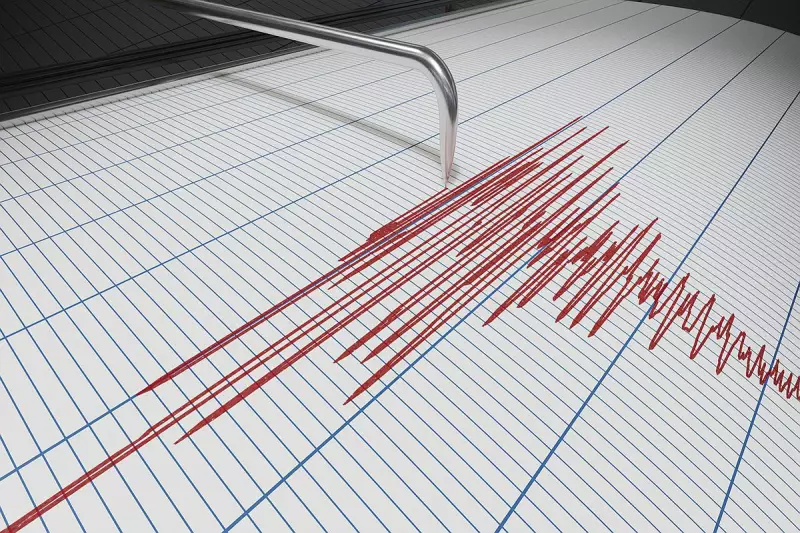
A significant earthquake measuring 5.1 on the Richter scale rattled the central region of Assam in the early hours of Monday, January 5, 2026. According to official bulletins, the seismic event caused widespread alarm but, fortunately, no immediate reports of injuries or property damage have been received.
Epicentre and Seismic Details
The tremor originated in Morigaon district, located on the southern bank of the mighty Brahmaputra river. Data from the National Centre for Seismology (NCS) pinpointed the exact time of the quake at 4:17 am. It occurred at a considerable depth of approximately 50 kilometres beneath the earth's surface.
The precise epicentre was recorded at a latitude of 26.37 degrees North and a longitude of 92.29 degrees East. This location in central Assam became the focal point for the release of seismic energy that rippled across a vast area.

Widespread Tremors Felt Across Region
The impact of the earthquake was not confined to Morigaon. Strong tremors were felt by residents in numerous adjoining districts on both banks of the Brahmaputra.
On the southern bank: People in Kamrup Metropolitan, Nagaon, East Karbi Anglong, West Karbi Anglong, Hojai, Dima Hasao, Golaghat, Jorhat, Sivasagar, Charaideo, Cachar, Karimganj, Hailakandi, Dhubri, South Salmara-Mankachar, and Goalpara districts experienced the jolt.
On the northern bank: The districts of Darrang, Tamulpur, Sonitpur, Kamrup, Biswanath, Udalguri, Nalbari, Bajali, Barpeta, Baksa, Chirang, Kokrajhar, Bongaigaon, and Lakhimpur also felt the ground shake.
The seismic waves travelled far beyond Assam's borders. Reports confirmed the tremor was felt in parts of central-western Arunachal Pradesh, the entire state of Meghalaya, and several areas of Nagaland, Manipur, Mizoram, Tripura, and even West Bengal. Internationally, the quake was also perceptible in central-eastern Bhutan, parts of China, and Bangladesh.
Public Response and Geological Context
The sudden quake, striking in the pre-dawn darkness, forced many residents to scramble out of their homes in search of safety in open areas. The event served as a stark reminder of the region's volatile geology.
The northeastern part of India is classified as a Zone V high seismic zone, making it one of the most earthquake-prone areas in the country. This high risk is due to its location at the junction of the Indian and Eurasian tectonic plates, a region of significant geological activity.
While this particular event passed without causing harm, it underscores the constant need for earthquake preparedness among the communities living in this seismically active belt. Authorities continue to monitor the situation, but the initial assessment points to a fortunate escape for the region.