

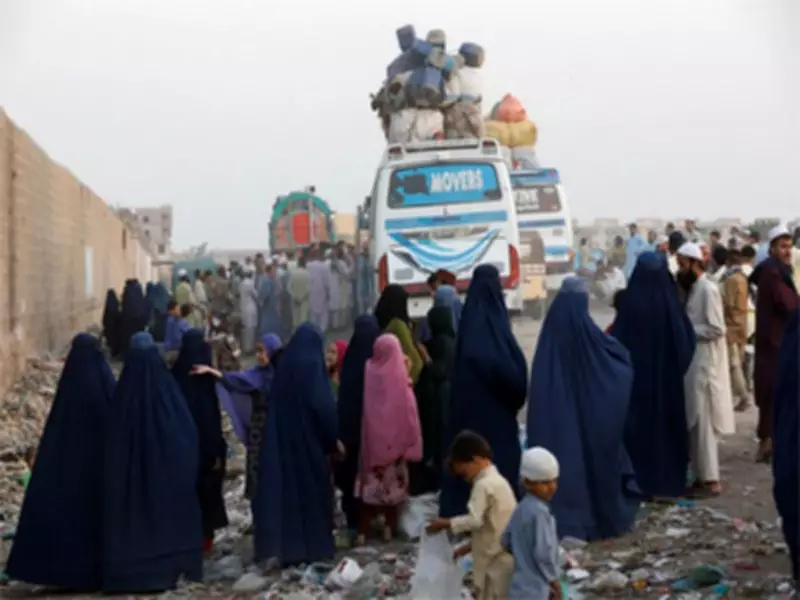
Afghan Migrants Confront a Year of Hardship Amid Widespread Deportations
The solar year 1404, spanning 2025 to 2026, has proven to be an exceptionally difficult and painful period for Afghan migrants globally. Large-scale deportations and increasingly stringent migration policies have severely disrupted the lives of thousands of families, exacerbating their instability and uncertainty, as reported by Tolo News.
Staggering Numbers of Forced Returns
According to the United Nations High Commissioner for Refugees (UNHCR), nearly 2.9 million Afghans returned to their homeland during this period, with approximately half of them being forcibly repatriated. The breakdown reveals that around 1.9 million were deported from Iran, 1 million from Pakistan, and 1,953 from Tajikistan. Afghanistan's Ministry of Refugees and Repatriation noted that the total number of migrants deported from Iran and Pakistan alone exceeded three million, highlighting the scale of this humanitarian crisis.
Personal Stories of Loss and Disruption
The impact of these deportations is deeply personal. Maroufa Eshaqi, an Afghan migrant in Iran, shared that Iranian authorities had previously issued census documents enabling migrants to access education, healthcare, and other essential services. However, these documents have now been declared invalid, raising significant concerns among the migrant community about their future and well-being.

Mohammad, recently deported from Pakistan, recounted a harrowing experience. He stated that their homes were destroyed, and outstanding debts owed to them were not repaid. Despite attempts to contact business associates, they returned to Afghanistan empty-handed, facing financial ruin and displacement.
Official Reactions and International Criticism
The forced deportations have drawn strong reactions from officials of the Islamic Emirate of Afghanistan. Abdul Salam Hanafi and Mawlawi Abdul Kabir expressed deep concern, urging Iran and Pakistan to treat Afghan migrants in accordance with Islamic principles, humanitarian values, and good neighbourly relations. Hanafi emphasized that the Islamic, humanitarian, and neighbourly rights of Afghan migrants must not be violated, calling on neighbouring countries to respect their property and residences under international laws.
Kabir added that any concerns should be brought to the ministry for necessary reforms, with plans for a follow-up meeting with the United Nations Assistance Mission in Afghanistan (UNAMA).
International organizations have also criticized these actions. Farhan Haq, Deputy Spokesperson for the UN Secretary-General, stated that the forced return of individuals recognized as refugees for decades contradicts Pakistan's long-standing humanitarian approach and violates the principle of non-refoulement, which prohibits returning refugees to places where they face danger.
Global Expansion of Deportation Pressures
Pressure on Afghan migrants extended beyond neighbouring countries. Several European nations, including Germany, Turkey, Austria, Tajikistan, Switzerland, and the United Kingdom, emphasized deportations of undocumented Afghan migrants throughout the year. Turkey alone detained more than 42,000 Afghan migrants, placing Afghans at the top among detained foreign nationals.
In the United States, President Donald Trump called for a review and restriction of Afghan migrants' presence, stating that all foreign nationals who entered during the Biden administration must be assessed, with those not qualifying removed. He affirmed that the United States would not tolerate threats and would never surrender in the face of terrorism.
Reports of Violence and Human Rights Concerns
Alongside deportations, reports emerged of violent treatment of migrants. Incidents involving Iranian border forces led to deaths, with Ahmad Shah Abdali, a relative of victims, urging the Islamic Emirate to address these concerns, noting that nine individuals from a single village were martyred.
Additionally, the execution of 85 Afghan citizens in Iran became one of the most controversial issues of the year. Legal expert Rohullah Sakhi Zada raised serious doubts about whether the fundamental rights of the accused, including access to defence lawyers and fair trial standards, were upheld, suggesting these principles were often not observed.

Efforts to Address the Crisis
In response, the Islamic Emirate of Afghanistan announced efforts to address the migrant situation, initiating the resettlement of returnees. This includes the distribution of free land across various provinces to support those forced back into the country.
This report is based on information from Tolo News and highlights the ongoing challenges faced by Afghan migrants amid global deportation trends.





