

Ancient DNA Reveals Mysterious Mass Extinction and Population Replacement in Northwest Europe
Historical records have long documented the mysterious disappearance of entire human groups from parts of northwest Europe, particularly in what is now France, thousands of years ago. These vanishings left behind deserted sites and unexplained phenomena, puzzling researchers for decades. A modern archaeology study, leveraging advanced genetic data, now provides profound insights into these enigmatic events, establishing that a sudden mass extinction of one population occurred, followed by its replacement by another.
Paris Tomb Discovery Uncovers Population Gap and Replacement
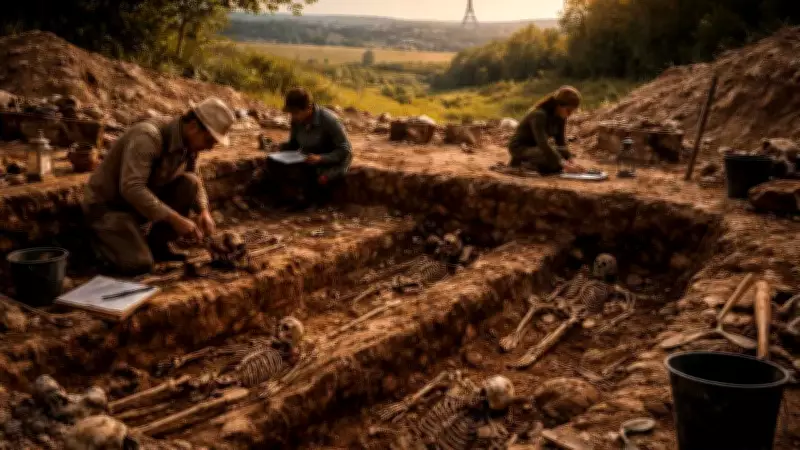
Among the key discoveries, findings from an archaeological dig near Paris stand out as particularly significant. The remains at the grave site belong to two distinct time periods, separated by approximately 200 years. Initially, the early remains were linked to a specific community, but after this gap, a fresh community emerged with entirely different genetic characteristics. Published in Nature Ecology & Evolution, the study concludes through genetic analysis that this represents a population replacement, not merely migration. This indicates the previous population either became extinct or experienced a drastic reduction in numbers.
DNA Analysis Shows Complete Population Turnover
Genetic testing was central to this investigation, with researchers analyzing individuals from before and after the event at the site. The results revealed no genetic relation between the two sets, suggesting a full demographic replacement. This phenomenon is uncommon yet highly significant, as it demonstrates the disappearance of an entire community and its subsequent replacement by a new group.

Causes of Population Collapse: Disease and Environmental Stress
Several factors likely contributed to the decline of the former population. Key reasons include:
- Deadly diseases: The emergence of some fatal illnesses could have led to a rapid reduction in population numbers.
- Environmental changes: Shifts in the environment may have made life and food acquisition more challenging, exacerbating the collapse.
These elements combined likely resulted in a population collapse rather than a steady decrease, highlighting the vulnerabilities of ancient societies.
Evidence of Abandoned Land and Forest Regrowth
Environmental evidence further supports this theory. Pollen studies in the area indicate that farmland was deserted during this period. With reduced human intervention, forests slowly regrew on the abandoned fields, serving as a clear sign of an abrupt population decline. This large area remained vacant for an extended time before another group eventually took over.
Migration and Demographic Replacement After Collapse
Following the population decrease, other groups migrated into the region. These newcomers had distinct genetic makeups and cultures, compensating for the missing population and leading to the total replacement of the old community by a new one. This migration pattern underscores how demographic shifts can reshape human landscapes over time.
Why This Discovery Changes Our Understanding of Human History
This research highlights the vulnerability of human populations, suggesting that despite evolutionary advancements, entire communities could vanish due to factors like illness, environmental pressures, and demographic dynamics. More importantly, it reveals that human history is not solely a narrative of progress; at times, drastic downfalls and replacements have also occurred, offering a more nuanced view of our past.
What This Tells Us About Ancient Human Survival
The evidence from the Paris tomb excavation and DNA analysis provides valuable insights into how ancient civilizations responded to challenges. It proves that survival was never assured, and environmental factors could influence entire regions. This realization serves as a reminder that human history is constantly evolving, shaped by both perseverance and susceptibility to external forces.






