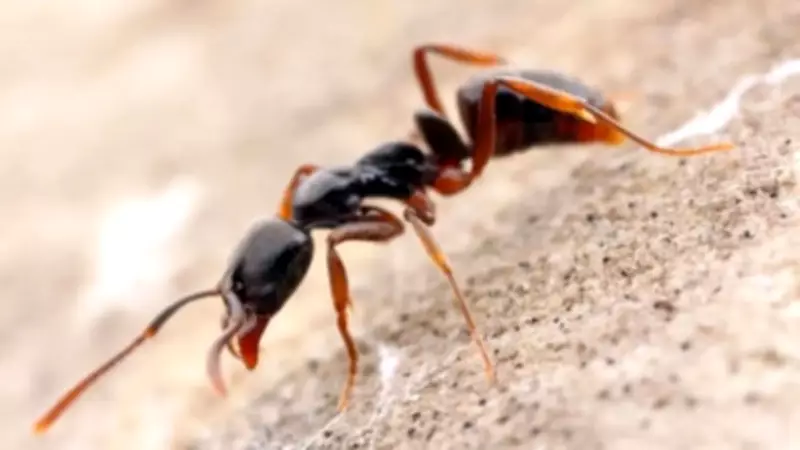
An invasive ant species from Asia, capable of delivering painful stings that can trigger life-threatening anaphylaxis, is rapidly spreading across the southeastern United States. Here is what you need to know about these ants and how to keep them at bay.
What Are Asian Needle Ants?
The Asian needle ant is an invasive species that, while not aggressive, will sting when disturbed. The sting causes intense, intermittent pain lasting for hours. Benoit Guénard, an entomology professor at the University of Hong Kong who studied these ants in North Carolina, described the sensation to the New York Post as akin to someone inserting a needle directly into your flesh. The pain is sharp and acute but localized. The sting may also cause hives and, in some cases, life-threatening anaphylaxis, a severe allergic reaction characterized by respiratory distress, throat swelling, and rapid heartbeat.
Native to China, Japan, and Korea, Asian needle ants were first detected in the United States in 1932. Since then, they have spread to at least 20 states across the American Southeast, with the highest concentrations in North Carolina, South Carolina, Georgia, and Alabama, according to Antmaps.org.

How to Identify Asian Needle Ants
Scientifically known as Brachyponera chinensis, these ants are small, shiny, and dark brown to black, with lighter orange-brown tips on the antennae and legs. Worker ants measure about 0.2 inches in length. The US Department of Agriculture notes that identifying Asian needle ants may require an experienced eye, as they resemble other ant species in the eastern United States.
However, they differ from common ants in several ways. They do not build visible anthills; instead, they nest under and within logs, debris, stones, and leaf litter. They can also thrive near homes and businesses, hiding under mulch, pavers, landscape timbers, and other objects.
Steps to Keep These Ants Away
Eliminating Asian needle ants is challenging due to their stealthy nature. The USDA acknowledges that, like many invasive species, these ants are likely here to stay. No formal eradication method has been established, but North Carolina State University suggests protein-based pesticide baits as the most effective approach. Professional products such as Extinguish Plus, Advion Fire Ant Bait, Optigard, and Maxforce FG are suitable, while homeowners can use fire ant baits like Amdro. However, this approach manages rather than eradicates the ants.
Experts recommend learning to coexist with these stinging ants, much like we have with other invasive species. Andrew Johnston, an insect diagnostician at Purdue University, advises wearing gloves and being mindful of what you touch, noting that Asian needle ants are not aggressive and do not swarm like fire ants.