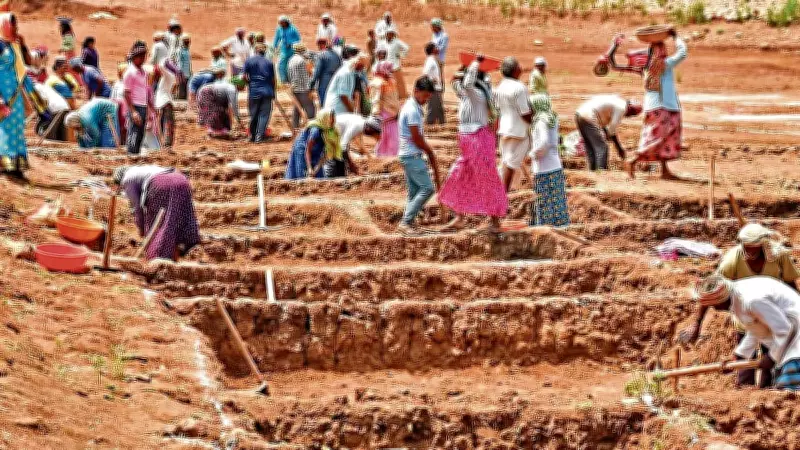
Labourers working under the Mahatma Gandhi National Rural Employment Guarantee Scheme (MGNREGS) in Karnataka's Yadgir, Raichur, and Ballari districts have reported that they continue to work under harsh conditions despite the deadly heatwave, as they have no alternative sources of income. The situation highlights the lack of effective measures to protect workers from extreme weather events.
Ground Reality Remains Unchanged
Speaking to Deccan Herald, several workers said that while the government has issued advisories about heatwave precautions, little has changed on the ground. They are forced to work in scorching temperatures, often exceeding 40 degrees Celsius, to earn their daily wages. One worker from Yadgir said, "We know it's dangerous, but what can we do? We have families to feed. There is no other work."
No Alternative Income Sources
The lack of alternative livelihood options has left these labourers with no choice but to continue working under the sun. Many of them are daily wage earners who depend entirely on MGNREGS for their survival. A labourer from Raichur stated, "The government talks about safety, but they don't provide any shade, drinking water, or rest breaks. We have to work from morning to evening."

Calls for Better Implementation
Activists and trade unions have urged the Karnataka government to enforce heatwave safety protocols strictly. They demand that work hours be rescheduled to early mornings or evenings, and that adequate water, shade, and medical facilities be provided at worksites. However, workers say these measures are rarely implemented in practice.
Heatwave Deaths on the Rise
Karnataka has witnessed a surge in heatwave-related deaths this year, with several fatalities reported among outdoor workers. According to health department data, the number of heatstroke cases has risen sharply compared to previous years. Critics argue that the government's response has been inadequate, focusing more on advisories than on concrete action.
The plight of MGNREGS workers underscores the broader impact of climate change on vulnerable communities. As temperatures continue to rise, experts warn that without urgent interventions, more lives will be at risk. They call for a comprehensive heat action plan that includes income support during extreme weather events and long-term measures to create sustainable livelihoods.