

In a stark warning months before Bangladesh's crucial general elections, the nation's media is confronting an existential threat, with the fundamental debate shifting from freedom of expression to the basic "right to stay alive." Editors of leading Bangladeshi newspapers issued this grave assessment following a series of violent attacks and explicit death threats against journalists.
Violent Attacks and Trapped Journalists
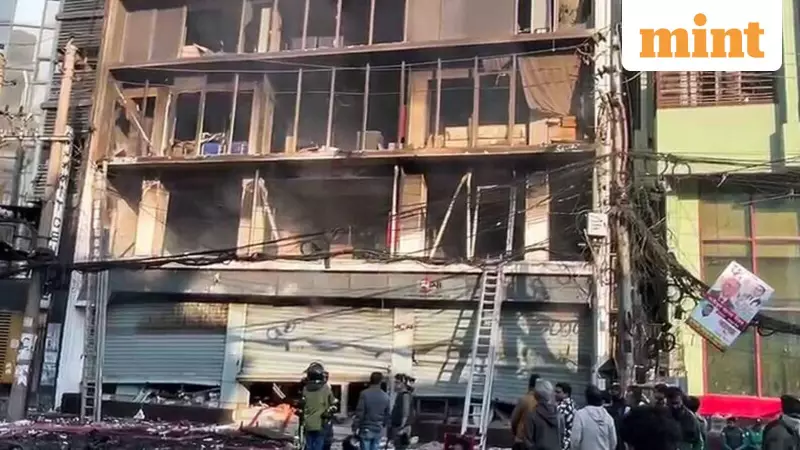
The alarming situation escalated dramatically when mobs targeted the offices of two of the country's most prominent newspapers—Prothom Alo and The Daily Star—in Dhaka on Thursday night. The assailants vandalised and set the buildings ablaze, deliberately trapping several journalists and staff inside for hours. Police and fire services were initially prevented from reaching the scene, exacerbating the danger.
Mahfuz Anam, editor and publisher of The Daily Star, revealed that 26-27 media workers were forced to flee to the rooftop of The Daily Star building to escape the inferno. He emphasised that the attacks were not mere protests but deliberate attempts to cause fatalities. "Otherwise, the mob would have told journalists to leave before setting the buildings on fire," Anam stated at a press conference attended by senior politicians and business leaders.

Death Threats and a Climate of Fear
Beyond the physical violence, a pervasive climate of fear is being fuelled by social media. Anam pointed to posts that allegedly called for journalists from both dailies to be "tracked down and killed at their homes." This chilling development underscores the extreme risks faced by the press. "Freedom of expression is no longer the main issue. Now it is about the right to stay alive," Anam declared, summarising the perilous environment. "The media in Bangladesh is facing a fight for survival."
The violence erupted following the death of Sharif Osman Hadi, a 32-year-old radical right-wing youth leader and spokesperson for Inqilab Mancha. Hadi, a staunch critic of India and a key figure in the 2024 pro-democracy uprising that ousted Sheikh Hasina's government, died on December 19 while undergoing treatment in Singapore. He was also a candidate for the scheduled February 12, 2025, general elections.
Official Response and Political Backdrop
The attackers accused the newspapers of "serving the interests" of India and the deposed prime minister, Sheikh Hasina. In response, the interim government led by Muhammad Yunus announced the arrest of nine people in connection with the attacks on the newspaper offices and cultural organisations. However, authorities described the perpetrators as fringe elements, a characterisation that has drawn criticism from rights groups.
The Dhaka Metropolitan Police (DMP) defended its delayed intervention at the newspaper offices. DMP Additional Commissioner Nazrul Islam argued that immediate action could have worsened the situation, stating, "The reason we could not go into action there was to ensure that no human life was lost." Journalists and rights activists, however, contend that authorities failed to prevent the violence despite prior appeals for protection.
This crisis unfolds during a fragile political transition under the Yunus regime, aimed at restoring democracy. The incident highlights the intense rivalry between the two main political forces: the Awami League and the Bangladesh Nationalist Party (BNP), led by Khaleda Zia. Furthermore, the Islamist party Jamaat-e-Islami is seeking to expand its influence in the current vacuum.
The severity of the press freedom crisis is quantified by Bangladesh's ranking of 149th out of 180 countries on the World Press Freedom Index 2025 by Reporters Without Borders (RSF). While this marks a slight climb, the country remains in the "very serious" category, with noted concerns over journalist attacks, the use of the Cyber Security Act, and ongoing intimidation.
The combined assault—physical attacks on media houses, direct death threats to journalists, and a contentious political climate—paints a dire picture for democratic institutions in Bangladesh as it approaches a pivotal electoral test.






