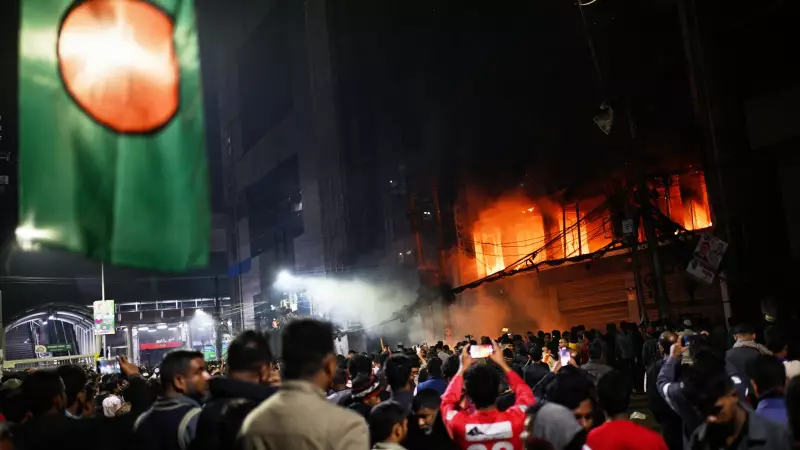
In a severe blow to independent media, Bangladesh's leading English-language daily, The Daily Star, was forced to suspend its print edition for the first time in its 35-year history. This unprecedented halt came after violent protesters stormed and set fire to its Dhaka office, alongside the premises of the prominent Bengali daily Prothom Alo, on the night of December 19, 2025.
A Night of Violence and a 'Dark Day' for Journalism
The attacks were reportedly triggered by public anger over the death of Sharif Osman Hadi, a 32-year-old senior leader of the student protest platform Inqilab Mancha. Hadi, who was a vocal critic of India and part of the youth movement opposing former Prime Minister Sheikh Hasina, died from gunshot injuries in a Singapore hospital on December 19. He had been shot by masked attackers outside a mosque in Dhaka on December 12.
Following his death, hundreds of protesters targeted the two newspaper buildings. The violence caused significant damage, with large sections charred and smoke billowing from the Prothom Alo office. Kamal Ahmed, consulting editor of The Daily Star, described a harrowing scene where 28 staff members were trapped on the rooftop for hours as the lower levels burned. "They were gasping for fresh air," Ahmed told the BBC, noting they were only rescued after additional military reinforcement arrived.

Newspaper's Stern Condemnation and Accusations
In a powerful statement headlined 'A dark day for independent journalism', The Daily Star condemned the assault, framing it as an attack far beyond their own institutions. "This is not merely an attack on two newspapers. It is an attack on independent journalism, freedom of speech, and the sanctity of private property. This must not be taken lightly," the publication declared.
The newspaper also pointed a finger at the authorities, expressing dismay at the "government’s relaxed attitude towards the safety and security of news outlets" despite prior threats. It alleged that both newspapers had faced repeated threats which were never seriously investigated. While acknowledging the eventual help from fire services, police, and the army, the management stated that a more coordinated official response could have mitigated the danger to their employees.
Political Undertones in a Tense Election Climate
The incident casts a long shadow over Bangladesh's fragile political environment. The country is scheduled to hold elections in February 2026, the first since Sheikh Hasina fled following mass protests the previous year. The Daily Star suggested that "certain elements and quarters have exploited the public anger" to create instability and derail the forthcoming polls.
The interim government, led by Nobel laureate Muhammad Yunus, condemned the attacks. In a statement reported by the BBC, it said violence against journalists was an attack on truth and warned that the nation's historic democratic transition "must not be derailed by those few who thrive on chaos and reject peace." Investigations into Hadi's killing are ongoing, with several individuals already detained.
For now, The Daily Star's print operations remain out of commission, marking a somber moment for press freedom in Bangladesh. The charred offices stand as a stark testament to the escalating tensions and the perils faced by independent media in a polarized landscape.