

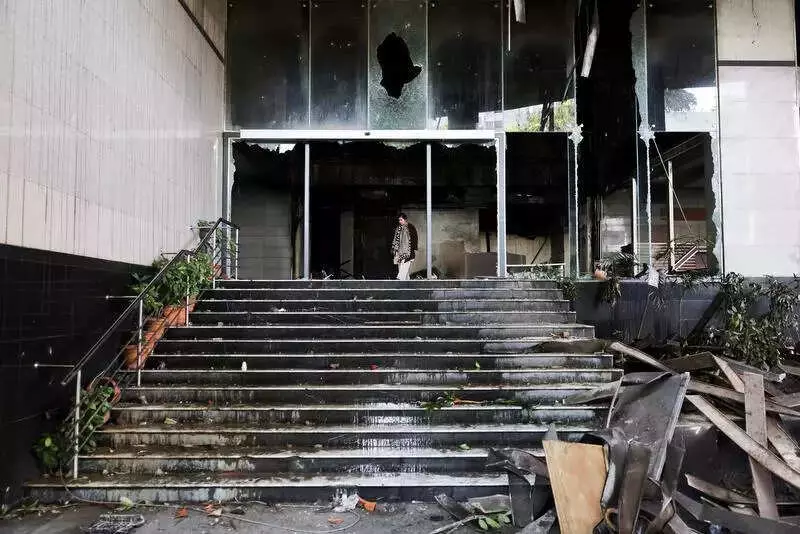
In a shocking assault on press freedom, the offices of Bangladesh's two leading newspapers, Prothom Alo and The Daily Star, were violently attacked and set on fire by mobs on Thursday night. Veteran journalists within the country point to the publications' sustained focus on the 1971 Liberation War in the lead-up to December 16 Vijay Divas as the immediate trigger for the aggression.
Non-Partisan Stance Ruffles Feathers
Beyond their historical coverage, the two dailies have also drawn ire for maintaining a non-partisan editorial stance since the July 2024 uprising. They have consistently highlighted lapses in law and order and raised critical questions about women's safety, challenging narratives from various political factions. The mob violence was ostensibly in protest of the death of Sharif Osman Hadi, a frontline figure of the July uprising. The attackers vandalised and torched the newspaper offices, trapping journalists inside the burning buildings until police, after multiple pleas, arrived to rescue them.
Both newspapers were forced to skip their print editions on Friday but managed to resume publication on Saturday. A senior Prothom Alo journalist, speaking anonymously, described the incident as a "planned attack" intended to send a chilling message to other media outlets refusing to adopt a far-right stance. "Far-right outfits active now in Bangladesh have never liked Prothom Alo and Daily Star because these outfits are against democratic and secular voices. The ideological conflict stems from this," the journalist revealed, adding that the same groups had previously created disturbances outside Prothom Alo's office after the exit of former Prime Minister Sheikh Hasina.

Historical Narratives and Political Timing
In recent weeks, Prothom Alo had published a series of articles revisiting the 1971 Liberation War, reigniting public memory of the Mukti Bahini and founding leader Sheikh Mujibur Rahman. A journalist from the daily noted that every political outfit tries to own history to create a legacy, recalling that the Awami League, during its tenure, used the same historical legacy to shield itself from corruption and anti-incumbency allegations.
The timing of the attacks is seen as highly significant, coinciding with the announcement of elections and the scheduled December 25 arrival of BNP acting chairman Tarique Rahman. A former Daily Star journalist, now an editor elsewhere, suggested an "effort to dislodge the election process scheduled for February," with groups like Hefazat-e-Islam and Jamaat-e-Islami potentially gaining from the ensuing volatility.
A Fearful Climate and Defiant Resolve
In the aftermath of the attack, journalists from both institutions are "gasping for air" in a political atmosphere saturated with violence and threats from anti-democratic forces. While many declined to be quoted directly due to fear, their resolve remains firm. Chief Adviser Muhammad Yunus condemned the assaults, terming them "unwanted," "barbaric," and an outright "attack on free media."
Despite the palpable fear of more such attacks in the volatile run-up to the national elections, the commitment to professional journalism stands unwavering. A Daily Star journalist affirmed, "Both newspapers will continue with professional journalism. They were attacked when Awami League or BNP was in govt. They were also attacked during the regime of an army-backed govt in Bangladesh. But that will not derail them from their aim." The incident underscores the intense pressures facing independent media in Bangladesh's charged political landscape.






