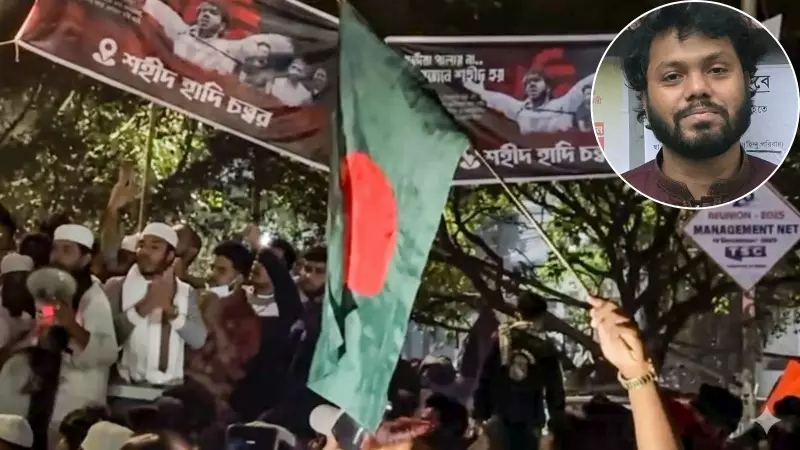
Bangladesh's capital, Dhaka, was plunged into a night of unprecedented violence and arson as coordinated mob attacks targeted leading media houses and cultural institutions. The violent protests, which erupted following the death of activist Sharif Osman Hadi, have raised severe concerns over press freedom and law and order in the country.
Media Under Siege: Journalists Trapped in Burning Buildings
The headquarters of two of Bangladesh's most prominent newspapers, The Daily Star and Prothom Alo, were brutally assaulted. At The Daily Star's office on Kazi Nazrul Islam Avenue, attackers forced entry around midnight, smashing furniture, damaging equipment, and setting the building ablaze.
Protesters reportedly looted computers, cameras, and hard drives while also blocking fire service vehicles from reaching the site. As thick black smoke filled the corridors and stairwells, at least 28 journalists and staff members were trapped for hours, eventually taking refuge on the rooftop where breathing became difficult.

Investigative journalist Zyma Islam posted a desperate plea on Facebook around 1:00 AM, writing, “I can’t breathe anymore. There’s too much smoke. I’m inside. You are killing me.” The trapped individuals were finally rescued around dawn by a combined effort of army personnel and firefighters.
The attack forced The Daily Star to miss its print edition for the first time in its 34-year history, with the building left without electricity, water, or gas.
A Parallel Assault on Prothom Alo and Cultural Hubs
A similar scene unfolded at the Karwan Bazar headquarters of Prothom Alo. After a crowd swelled to several hundred people, they shattered the glass facade, broke the main gate, and set fires. The mob disabled fire safety systems, vandalised CCTV cameras, and looted over 150 computers and laptops, along with cash and personal belongings.
Several employees were injured, and the newspaper could not publish its Friday print edition for the first time in 27 years. Online operations were also severely disrupted.
The violence was not confined to media houses. Mobs also attacked:
- Chhayanaut Bhaban in Dhanmondi, damaging musical instruments and setting parts of the cultural centre on fire.
- The central office of Bangladesh Udichi Shilpigoshthi, which was set ablaze.
- The residence of Bangladesh's founder, Sheikh Mujibur Rahman, at Dhanmondi-32, where demolition continued with heavy machinery.
Outside Dhaka, unrest was reported in Chattogram and Rajshahi, with incidents including stone-throwing at the Assistant Indian High Commission.
Trigger and Aftermath: A Nation on Edge
The wave of violence followed the death of Sharif Osman Hadi, a July uprising frontliner and election aspirant from Dhaka-8. Hadi died in a Singapore hospital a week after being shot in the head in Dhaka's Paltan area in broad daylight.
Protesters outside the attacked media houses accused the newspapers of responsibility for the circumstances surrounding Hadi's killing, labelling them “Delhi’s lapdog.” They chanted slogans including “We have shed blood; we will shed more” while demanding punishment for Hadi's killers.
While no fresh incidents were reported on Saturday, people from across Bangladesh poured into Dhaka for Hadi's funeral at the Jatiya Sangsad Bhaban. Authorities remain on high alert as calls for a rally demanding action against the attackers circulate.
In a related development, the interim government under Muhammad Yunus has reportedly asked Meta to take down violence-inciting hate content from Facebook and Instagram. The attacks have starkly highlighted the fragile state of institutional security and press freedom in Bangladesh.