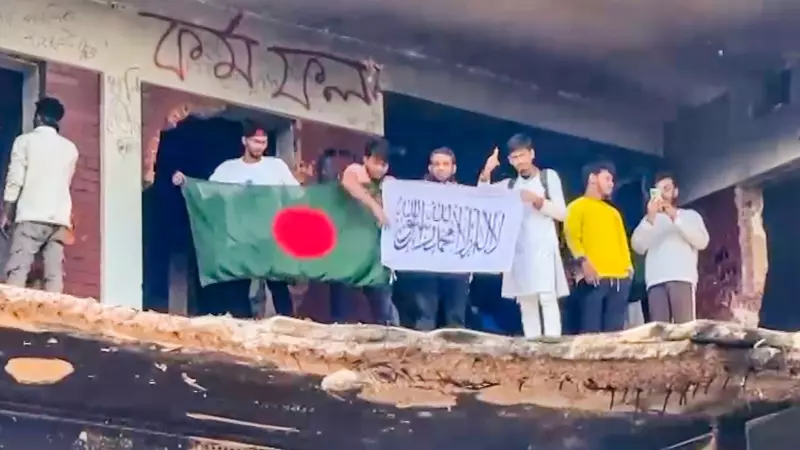
Bangladesh's capital, Dhaka, has been engulfed by violent protests and clashes, leading to a tragic loss of life and widespread injuries. The unrest, which has seen university campuses transform into battlegrounds, was triggered by the death of a young student and fueled by long-standing grievances over government job quotas.
Death of a Student Ignites Widespread Anger
The catalyst for the latest wave of demonstrations was the death of Sharif Osman Hadi, a 24-year-old student of Dhaka College. Hadi, who was actively participating in the protests, was admitted to Dhaka Medical College Hospital on July 17 with severe injuries. Despite medical efforts, he succumbed to his wounds, with doctors citing severe internal bleeding as the cause of death. His passing became a rallying cry, amplifying the students' demands for justice and systemic reform.
These protests are not an isolated incident but part of a larger, recurring movement. Students and job seekers have been demanding the abolition of a quota system that reserves a significant percentage of government jobs for specific groups, including descendants of veterans from the country's 1971 war of independence. Protesters argue the system is outdated and discriminatory, favoring a small segment over merit-based selection.

Violence Erupts Across Dhaka
The situation escalated dramatically following Hadi's death. On Saturday, July 20, intense clashes broke out between protesters and law enforcement agencies in multiple locations across Dhaka. The epicenters of violence included the Shahbagh intersection, the Dhaka University area, and the vicinity of the Bangladesh Secretariat.
Three individuals lost their lives during these confrontations. Among the deceased was a policeman, highlighting the severity of the clashes. The toll on human safety was staggering, with over 100 people injured, including numerous students, journalists, and police personnel. Hospitals were inundated with the wounded, and the streets witnessed chaotic scenes of tear gas, rubber bullets, and projectiles.
In a significant development, the Bangladesh Supreme Court intervened. On Sunday, July 21, it suspended the High Court's order that had previously reinstated the 30% freedom fighter quota in government jobs. This judicial pause was seen as a direct response to the escalating public unrest and a potential step towards de-escalation.
Government Response and Mounting Tensions
The government, led by Prime Minister Sheikh Hasina, has taken a firm stance. Authorities have accused opposition groups, specifically the Bangladesh Nationalist Party (BNP) and its student wing, of infiltrating and instigating the peaceful student protests to create chaos. The Prime Minister condemned the violence, stating that those involved in arson and attacks would face strict legal consequences.
However, this narrative has been rejected by the protesting students, who maintain that their movement is spontaneous and apolitical, driven solely by their demand for a merit-based future. The internet landscape became a secondary front, with mobile internet services being shut down for a period, severely restricting communication and the flow of information. Furthermore, several prominent student leaders associated with the protest movement have been detained by police, raising concerns about the suppression of dissent.
The international community has begun to take note. The United Nations has expressed concern over the violence and called for restraint from all sides, emphasizing the right to peaceful assembly. Diplomatic missions in Dhaka are closely monitoring the volatile situation as it continues to unfold.
The protests in Bangladesh represent a critical juncture, pitting the aspirations of the country's massive youth population against established political structures. While the Supreme Court's suspension of the quota order offers a temporary respite, the core issues of governance, employment, and democratic expression remain unresolved. The coming days will be crucial in determining whether the path forward is one of dialogue or further confrontation.