

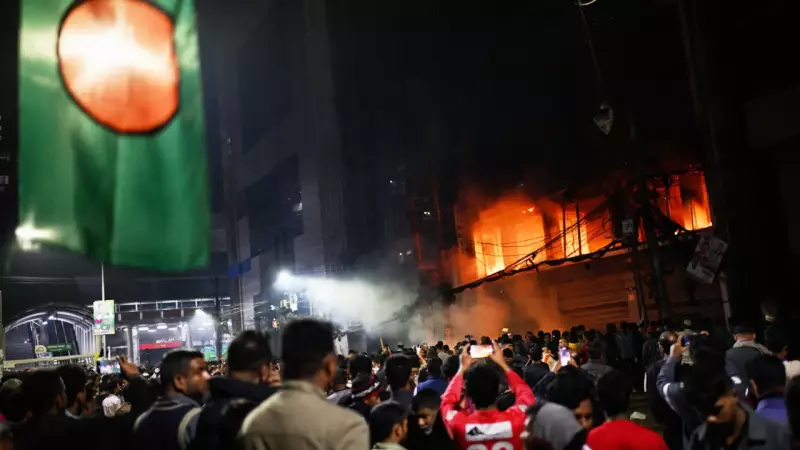
The president of the Bangladesh Students League, Saddam Hussain, has launched a scathing attack on the country's interim government, alleging a dangerous trend of 'Talibanisation' is taking root. Hussain, who leads the student wing of the now-banned Bangladesh Awami League, made these explosive remarks in an interview with ANI, pointing to recent mob lynchings and a surge in anti-India sentiment.
Government Accused of Fanning Flames
Hussain directly accused the Muhammad Yunus-led interim administration of deliberately encouraging anti-India rhetoric. He claimed this was a calculated strategy to divert public attention from the government's own domestic failures and to appease extremist factions. "He (Muhammad Yunus) is chanting the anti-India rhetoric so that he can appease the fundamental, extremist groups, and cover up his domestic failure," Hussain stated.
The student leader cited the horrific lynching of Dipu Chandra Das, who was attacked and burned alive, as a sign of a terrifying 'new normal'. He asserted that such mob violence has become routine and that the government is complicit in the persecution of minorities. "A sort of Talibanization is going on in Bangladesh right now," he warned, painting a picture of total lawlessness where mobs rule and the government facilitates terrorist forces.

Political Turmoil Deepens with Exiled Leader's Return
These allegations come amid intense political unrest, triggered by the killing of student leader Sharif Osman Hadi and widespread violent protests. In a major development, Bangladesh Nationalist Party (BNP) acting chairman Tarique Rahman returned to Bangladesh on Thursday after 17 years in exile.
Hussain and the Awami League's student wing have labeled Rahman's return a "backdoor deal" between the interim government and the BNP-Jamaat alliance. They argue this move is designed to facilitate a one-sided election and perpetuate fascist politics, rather than stabilize the nation. Hussain highlighted that Rahman is a convicted criminal in cases linked to a 2004 attack and bypassed judicial processes to return.
A Nation on Edge as Violence Continues
The political accusations are set against a backdrop of ongoing public violence. Shortly after the killing of Dipu Chandra Das, another man was beaten to death by a mob in Rajbari’s Pangsha upazila, as reported by The Daily Star. Hussain holds the government ultimately responsible for the breakdown in law and order, claiming it is enabling a climate where extremists can operate openly.
He concluded with a grim assessment, suggesting that the current political maneuvers, including Rahman's controversial return, will "once again push democracy out of the syllabus" for Bangladesh. The situation remains volatile, with the interim government facing severe criticism from opposition groups as the country grapples with internal strife and allegations of state-sponsored radicalization.






