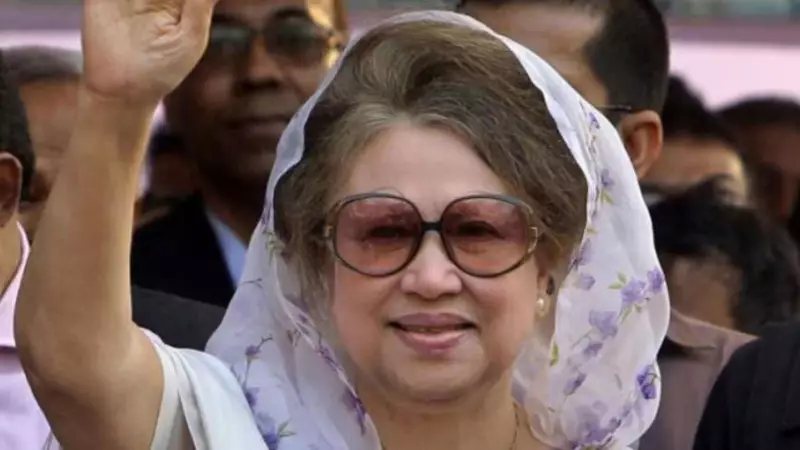
The political landscape of Bangladesh was plunged into mourning on Tuesday as former Prime Minister Khaleda Zia passed away at the age of 80. Her death was confirmed by her party, the Bangladesh Nationalist Party (BNP), marking the end of an era for a leader who was a central figure in the nation's politics for over three decades.
A Political Journey Marked by Triumph and Tribulation
Khaleda Zia, the first woman to lead Bangladesh's government, served as prime minister for three terms. Her tenure included the period from 1991 to 1996, a brief stint in 1996, and again from 2001 to 2006. Her long-standing and defining political rivalry with current Prime Minister Sheikh Hasina shaped the nation's democratic trajectory for a generation.
Her initial term was notable for significant reforms, including the restoration of the parliamentary system. Her government also championed educational access, implementing policies for free primary schooling and free education for girls up to Class 10.

However, her later years were fraught with legal challenges. She faced multiple corruption cases, which she and her party maintained were politically motivated. In a significant turn of events, the Supreme Court acquitted her in the last remaining corruption case in January 2025. This legal clearance paved the way for her to contest in the upcoming national elections.
Death on the Eve of an Electoral Comeback
The timing of her death adds a profound layer of political significance. Her nomination for the February 12 general elections was filed just a day before her passing. She was set to contest from the Feni-1 constituency, signaling an attempted return to the political forefront despite her prolonged illness.
Her son, Tarique Rahman, the acting chairman of the BNP, had returned to Bangladesh last week after 17 years in exile. His return had energized the party's base ahead of the crucial polls, creating a shift in the opposition's dynamics.
A Legacy and a Nation at a Crossroads
Khaleda Zia's death occurs against a backdrop of heightened political tension in Bangladesh. The country has witnessed intense public debate around governance, democracy, and minority rights in recent months.
The situation drew international attention when India's Ministry of External Affairs expressed concern over "unremitting hostilities" against minorities, following the lynching of two Hindu men. Dhaka, however, rejected New Delhi's criticism, asserting that it overlooked Bangladesh's historical record of communal harmony.
With the February 12 elections looming, the passing of the BNP's paramount leader creates a major vacuum within the principal opposition party. Her legacy is one of a formidable political warrior whose career was a tapestry of groundbreaking leadership, imprisonment, illness, and relentless legal battles, forever intertwined with the fate of the Bangladesh Nationalist Party.