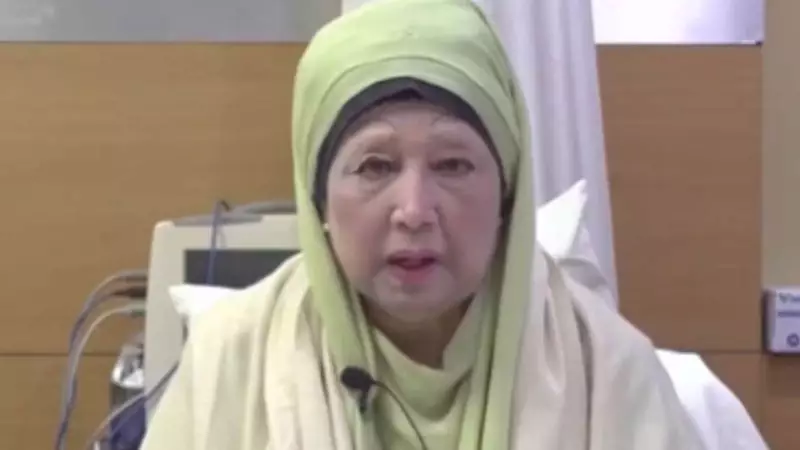
Khaleda Zia, the trailblazing former Prime Minister of Bangladesh who made history as the nation's first woman to hold the office, has died. She was 80 years old. Her political party, the Bangladesh Nationalist Party (BNP), confirmed the news of her passing in an official announcement on Tuesday, December 30, 2025.
A Political Legacy Forged in Tragedy
Khaleda Zia's entry into the volatile arena of Bangladeshi politics was not by design but through profound personal tragedy. She was the widow of President Ziaur Rahman, the military leader who founded the Bangladesh Nationalist Party. Following his assassination in 1981, Zia was thrust into a leadership role within the party, eventually becoming its chairperson.
Her political journey saw her serve as the Prime Minister of Bangladesh for three separate terms. Her first tenure began in 1991, marking a historic moment for South Asian politics. She would later return to power in 2001, serving until 2006. Her time in office was defined by a fierce rivalry with Sheikh Hasina of the Awami League, creating a political dynasty dynamic that has shaped Bangladesh for decades.

Later Years and Legal Battles
In her later years, Khaleda Zia faced significant legal and health challenges. She was convicted in a series of corruption cases, which her party and supporters decried as politically motivated. Due to these convictions, she was barred from contesting elections and spent considerable time imprisoned before being released on conditional bail.
Her health had been a matter of public concern for several years, with reports of her receiving medical treatment for various ailments. Her passing marks the end of an era in Bangladeshi politics, closing a significant chapter for the BNP and the nation's opposition forces.
An Enduring Impact on South Asia
The death of Khaleda Zia is a momentous event with immediate and long-term implications for Bangladesh's political landscape. As a two-time prime minister and the country's first woman head of government, her influence extended beyond her party. She was a central figure in the nation's democratic evolution, representing a powerful conservative and nationalist voice.
Her legacy is complex, intertwined with Bangladesh's struggle for democratic consolidation, periods of political turmoil, and the persistent tension between its two major political dynasties. The void left by her departure will undoubtedly trigger a period of reflection and potential realignment within the BNP and the broader opposition spectrum in Bangladesh.
Condolences and reactions are expected to pour in from across the political spectrum in Bangladesh and from world leaders, acknowledging her role as a significant stateswoman in South Asia. The nation now prepares for the final rites of a leader who was both revered and contested, but whose place in history is firmly secured.