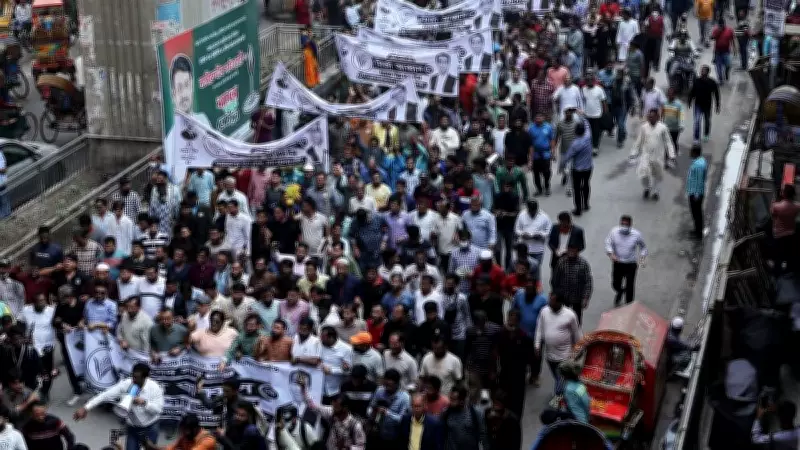
In a dramatic turn of events, Bangladesh's political scene is experiencing a profound resurgence, moving from a breaking point back to the ballot box. This shift marks a significant chapter in the nation's democratic journey, as various political forces realign and redefine their roles in the electoral arena.
The Remarkable Comeback of Jamaat-e-Islami
At the forefront of this political revival is the Jamaat-e-Islami (JI), a religious political party that has staged an impressive comeback following the takeover by the interim administration. After years of marginalization and political challenges, the JI has reemerged with renewed vigor and strategic positioning.
Historical Context and Political Evolution
The journey of Jamaat-e-Islami in Bangladesh's political landscape has been complex and multifaceted. From its historical roots to contemporary challenges, the party has navigated through various political climates, adapting its strategies to changing circumstances. The interim administration period served as a crucial turning point, creating opportunities for political reorganization and reinvention.

The party's resurgence represents more than just organizational recovery – it signifies a broader transformation in how religious political entities engage with mainstream democratic processes. This development comes at a time when Bangladesh's political ecosystem is undergoing significant reconfiguration, with traditional power structures being challenged and new alliances forming.
Redefining Mainstream Electoral Space
What makes this political development particularly noteworthy is Jamaat-e-Islami's ambitious goal to stake its claim in the mainstream electoral space like never before. This represents a strategic shift from peripheral political engagement to center-stage participation in Bangladesh's democratic processes.
Strategic Positioning and Electoral Ambitions
The party's leadership has been working diligently to position itself as a viable political alternative, focusing on several key areas:
- Building broader coalitions with other political entities
- Developing comprehensive policy frameworks that address contemporary challenges
- Engaging with diverse voter demographics across urban and rural constituencies
- Establishing stronger organizational structures at grassroots levels
This strategic approach reflects a sophisticated understanding of modern electoral politics and represents a departure from traditional political methodologies that have characterized the party's historical engagement.
Implications for Bangladesh's Democratic Future
The resurgence of Jamaat-e-Islami and its renewed focus on mainstream electoral participation carries significant implications for Bangladesh's political future. This development could potentially reshape political alliances, influence policy directions, and redefine the parameters of democratic competition in the country.
As Bangladesh continues its democratic journey, the integration of diverse political voices, including religious political parties, into mainstream electoral processes represents an important evolution in the nation's political maturity. This development suggests a more inclusive political environment where various ideological perspectives can compete within democratic frameworks.
Regional and Global Context
This political transformation in Bangladesh occurs within a broader regional context where similar patterns of political evolution are observable. The successful integration of religious political parties into mainstream democratic systems has precedents in other South Asian nations, providing both lessons and cautionary tales for Bangladesh's political stakeholders.
The international community will be watching closely as Bangladesh navigates this political transition, particularly given the country's strategic importance in South Asia and its role in regional stability and development initiatives.

As the political landscape continues to evolve, the coming months will be crucial in determining whether this resurgence translates into sustainable political influence and meaningful participation in Bangladesh's democratic processes. The nation stands at a crossroads, with the potential to establish new paradigms for political engagement that balance traditional values with modern democratic principles.