

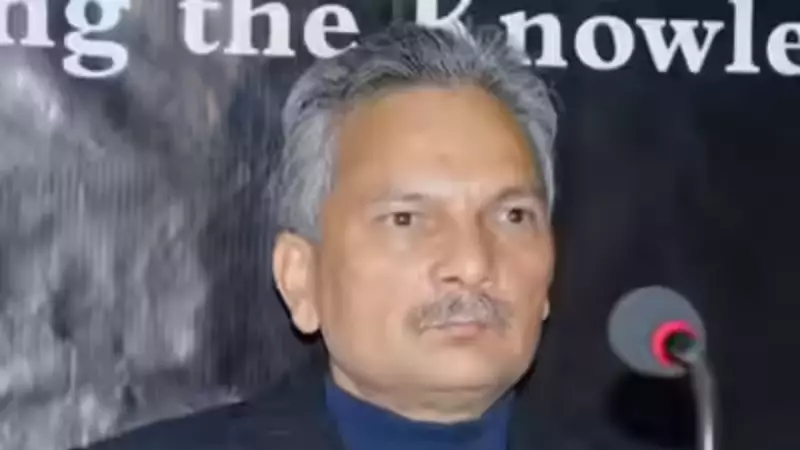
Former Prime Minister of Nepal, Baburam Bhattarai, delivered a sharp analysis of South Asia's enduring developmental challenges during a keynote address at IIT Bombay's TechFest on Saturday. He attributed the region's widespread poverty, stark inequality, and political instability to deeply entrenched extractive institutions, inadequate state capacity, and the failure to establish truly inclusive democratic systems.
Nepal's Turbulent History as a Regional Lesson
Reflecting on Nepal's own complex political journey, Bhattarai, an architect-turned-politician who joined the pro-democracy movement, outlined the nation's decade-long fight against monarchical rule. This struggle, he noted, eventually allowed him to contribute to drafting Nepal's new constitution. He openly acknowledged borrowing ideas from the Indian Constitution, crediting its principal author, Dr. B.R. Ambedkar.
He described Nepal's recent political uprisings as a direct consequence of systemic failures, highlighting rampant corruption, low state capacity, and chronic instability. To illustrate the point, Bhattarai revealed that Nepal has seen 30 different governments in the past 30 years, a churn that has made consistent policy-making and long-term development nearly impossible.

A Stark Diagnosis for South Asia's Political Economy
Bhattarai expanded his critique to the broader region, presenting troubling statistics. South Asia is home to 40% of the world's poor, a fact he called "a slap to the face." He argued that prosperity is impossible under "extractive and feudal" institutions, contrasting them with the inclusive models needed for growth.
He pointed to Nepal's historical stagnation under authoritarian monarchies and rigid hierarchies, further exacerbated by its delicate geopolitical position. "We have been caught between two powers and isolated for a millennium," Bhattarai stated, adding that this has led to a cycle of dependency. As a result, Nepal currently attracts the lowest foreign investment in South Asia.
A Call for Pragmatic Reforms and Regional Unity
The former PM called for urgent structural reforms in land, labour, and social justice to tackle inequality. He also warned of growing wealth gaps and environmental degradation, stressing that shared rivers and mountains necessitate regional cooperation on climate and resources.
Bhattarai emphasized deeper economic integration within South Asia as a vital path to stability and prosperity. He recalled urging former Indian Prime Minister Manmohan Singh and Pakistan's then-PM Yousaf Raza Gilani during the 2011 SAARC summit in Maldives to prioritize regional growth over bilateral disputes.
Rejecting ideological extremes, Bhattarai advocated for a pragmatic middle path he termed "scientific humanism", which seeks a balance between market forces, state intervention, and social justice. "We have fought for democracy," Bhattarai concluded. "Now we have to use it wisely."






