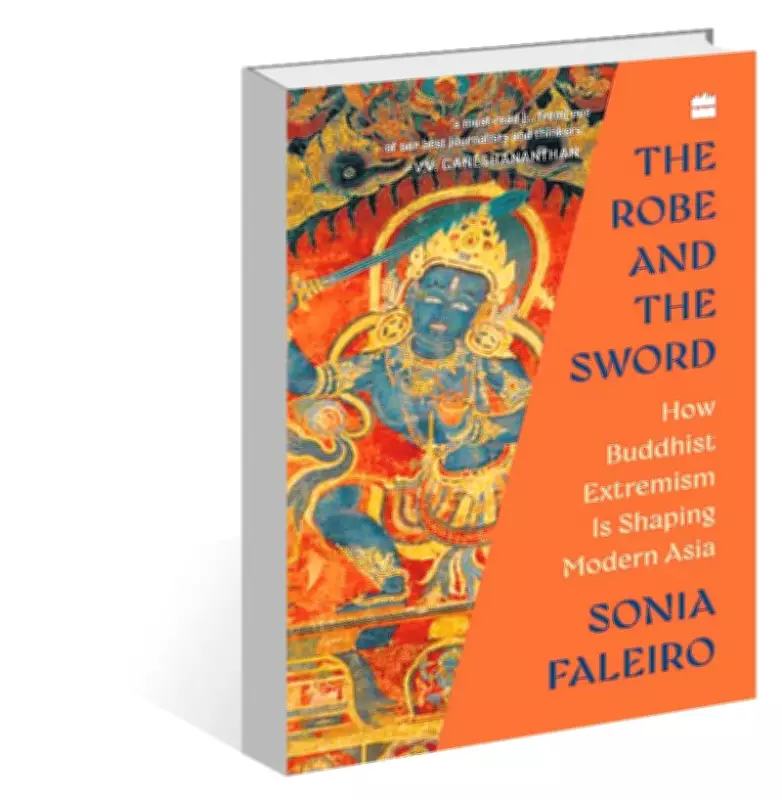
Book Review: 'The Robe and the Sword' Misses Mark on Buddhist Extremism in Asia
In her latest work, 'The Robe and the Sword: How Buddhist Extremism Is Shaping Modern Asia', author Sonia Faleiro delves into a complex and often overlooked phenomenon. The book aims to shed light on the rise of Buddhist extremism across various Asian nations, examining its political, social, and cultural impacts. However, despite its ambitious scope, the book has been met with criticism for falling short of its potential, being labeled a lost opportunity for in-depth exploration.
Exploring the Nexus of Religion and Politics
Faleiro's narrative traverses multiple countries, including Myanmar, Sri Lanka, and Thailand, where Buddhist nationalism has gained traction in recent years. She attempts to connect historical contexts with contemporary events, such as the Rohingya crisis in Myanmar and anti-Muslim violence in Sri Lanka. The book highlights how religious ideologies are being weaponized to fuel ethnic tensions and political agendas, posing significant challenges to regional stability.
Key themes addressed include:

- The role of monastic communities in promoting extremist views.
- Government complicity and policy shifts that enable such movements.
- Media portrayal and public perception of Buddhist extremism.
- Comparative analysis with other religious extremisms globally.
Criticisms and Shortcomings
While the topic is timely and crucial, reviewers argue that Faleiro's approach lacks the depth needed for such a sensitive subject. The book is criticized for:
- Superficial Analysis: Failing to provide nuanced insights into the socio-economic factors driving extremism.
- Limited Primary Research: Relying heavily on secondary sources, which may not capture grassroots realities.
- Overgeneralization: Treating diverse Buddhist communities as monolithic, ignoring internal variations and moderate voices.
- Missed Context: Not adequately addressing historical colonialism and its lingering effects on religious dynamics.
These flaws have led to the perception that the book skims the surface rather than offering transformative perspectives, making it a missed chance to contribute meaningfully to academic and public discourse.
Implications for Modern Asia
The rise of Buddhist extremism has far-reaching consequences, influencing everything from domestic policies to international relations. Faleiro touches on how these movements shape:
- National identity and exclusionary practices.
- Human rights issues, particularly affecting minority groups.
- Geopolitical alliances and conflicts in the Asia-Pacific region.
- Future trajectories of religious tolerance and secularism.
Despite its shortcomings, the book serves as a starting point for discussions on a critical issue. It underscores the need for more rigorous studies that balance journalistic storytelling with scholarly rigor to fully grasp the complexities of religious extremism in modern Asia.