

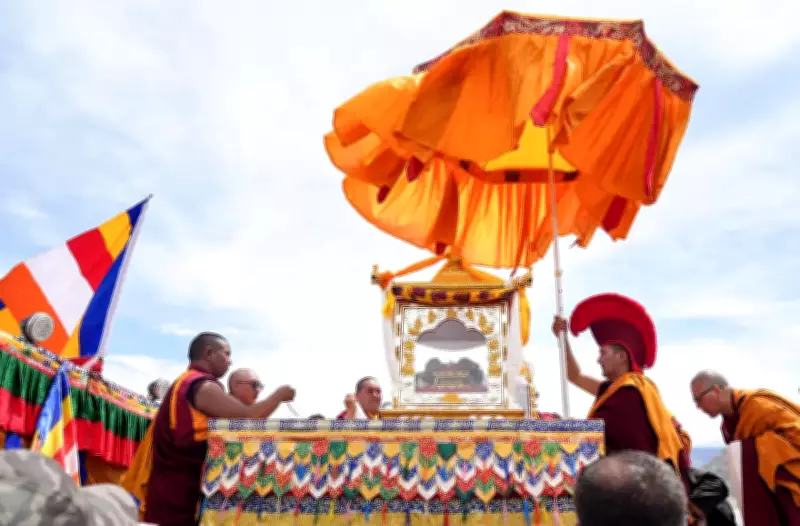
In a strong message for world peace, the sacred holy Piprahwa relics of Buddha have reached Ladakh from Delhi's National Museum for a fortnight-long, first-of-its-kind exposition starting May 1.
Community Celebration in Ladakh
The festival seeks to reinforce a sense of community in Ladakh, which has a significantly large Buddhist presence. Men, women, and children of all age groups traveled from across Leh to catch a glimpse of the relics, which were taken in a grand procession to Jivetsal, the venue of the exposition beginning Friday, marking the 2,569th Buddha Purnima.
High-Profile Inauguration
The opening ceremony will be attended by several union ministers, including Home Minister Amit Shah; chief ministers of Buddhist-dominated states; ambassadors; and Buddhist leaders. Leh and Zanskar are proposed to host many programs, exhibitions, and seminars over the fortnight.

Schedule of Veneration
The relics will be available for public veneration from May 2 to May 10, followed by exposition in Zanskar on May 11 and 12, and thereafter at Dharma Centre in Leh from May 13 to 14. They will be flown back to Delhi on May 15.
Ceremonial Reception
Lt Governor VK Saxena, along with senior Buddhist monks, received the relics. The Ladakh police accorded them a ceremonial guard of honor, while monks performed special prayers. The reception saw Buddhist monks playing traditional instruments used during prayers in monasteries, like the gyaling.
Global Significance
Over the years, the Piprahwa bone relics of Lord Buddha have been exhibited in several countries, including Thailand, Mongolia, Vietnam, Russia, Singapore, Bhutan, Sri Lanka, and Myanmar, drawing global attention and devotion.
The relics are associated with the Piprahwa stupa in Kapilvastu (in present-day Uttar Pradesh), the homeland of the Sakya clan of Lord Shakyamuni Buddha, and were excavated in 1898 by William Claxton Peppe. The sacred relics serve as profound symbols of the Buddha's living presence and his universal teachings.
Public Response
Speaking to TOI, people along the route said they felt blessed to be a part of the occasion and that seeing the relics was nothing short of a dream come true for them. Sonam Wangchuk Shakspo, deputy secretary general of the Asian Buddhist Conference for Peace in Mongolia and secretary ABCP-Indian National Centre, shared insights on how the exposition is the need of the hour and much awaited in Ladakh, where Buddha is revered and his teachings considered a guiding force.
Background and Context
Requests that the relics should be brought to Ladakh were made by the UT administration earlier this year, leading to the exposition. The timing of the arrival also gains significance as it comes after a difficult year when Ladakh witnessed unrest and protests that turned violent in September last year. Led by activist Sonam Wangchuk and local bodies, the demonstrators protested over demographic changes and industrial exploitation of the region's resources. The Leh Apex Body (LAB) and Kargil Democratic Alliance (KDA) have been demanding statehood for Ladakh, inclusion in the Sixth Schedule of the Indian Constitution, job reservations for locals, and a separate public service commission.






