

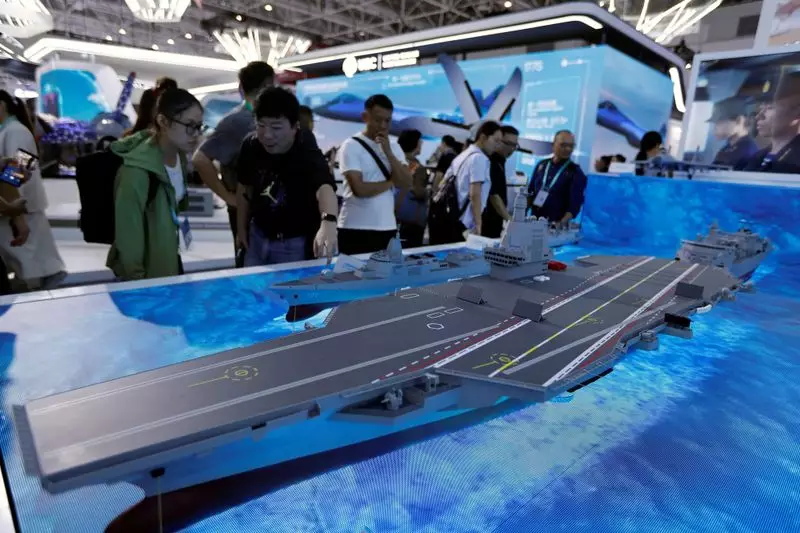
China has officially commissioned its third aircraft carrier, the Fujian, marking a significant milestone in Beijing's ambitious naval expansion program. The advanced warship represents China's growing military capabilities amid rising tensions in the Indo-Pacific region.
Advanced Features of the Fujian Carrier
The newly commissioned aircraft carrier, named after the coastal province opposite Taiwan, features state-of-the-art electromagnetic catapults for launching aircraft. This advanced technology represents a major leap forward from China's first two carriers, which used less efficient ski-jump ramps for takeoffs.
According to military analysts, the electromagnetic aircraft launch system (EMALS) allows the Fujian to launch a wider variety of aircraft more frequently and with heavier payloads. This capability significantly enhances the carrier's operational effectiveness and places it closer to technological parity with the most advanced American carriers.

China's Naval Modernization Timeline
China's carrier program has progressed rapidly over the past decade. The country commissioned its first aircraft carrier, the Liaoning, in 2012 after refurbishing an old Soviet-era hull. This was followed by the launch of the first domestically built carrier, Shandong, in 2019.
The Fujian represents the third carrier in China's growing fleet and demonstrates Beijing's commitment to developing a blue-water navy capable of operating globally. Military observers note that China appears to be following a pattern of incremental technological advancement with each new carrier design.
Regional Security Implications
The commissioning of the Fujian comes at a time of heightened tensions in the Indo-Pacific region. China's increasing naval capabilities have raised concerns among neighboring countries and the United States about Beijing's intentions and the changing balance of power in strategically important waterways.
Analysts suggest that the addition of the Fujian to China's fleet will extend the operational range of the People's Liberation Army Navy and enhance its power projection capabilities. This development is particularly significant given ongoing disputes in the South China Sea and increasing tensions around Taiwan.
While China describes its military modernization as defensive in nature, the rapid expansion of its carrier fleet has prompted regional neighbors to strengthen their own naval capabilities and security partnerships. The United States, which maintains the world's largest carrier fleet, continues to conduct freedom of navigation operations in the region.
The Fujian is expected to undergo extensive sea trials and training exercises before becoming fully operational. Meanwhile, satellite imagery suggests that China may already be planning additional carriers, indicating that the Fujian represents an intermediate step in Beijing's long-term naval ambitions rather than the final destination.






