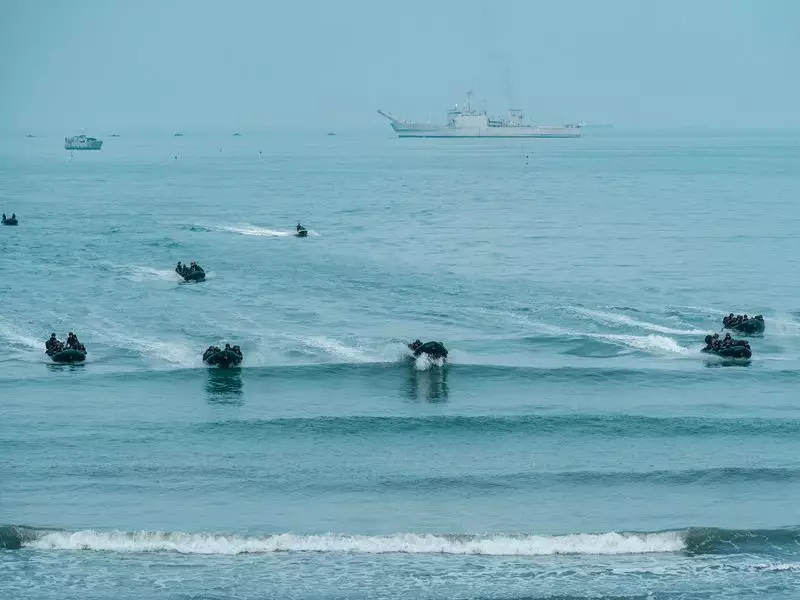
In a move that has escalated regional tensions, China deployed a significant naval and coast guard presence around Taiwan on a recent Friday. The operation involved six military vessels and one official coast guard ship, conducting activities in the strategic waters surrounding the self-ruled island.
Details of the Chinese Military Deployment
The Ministry of National Defence in Taiwan confirmed the presence of the Chinese vessels. According to their statement, the six People's Liberation Army (PLA) ships were detected operating in multiple zones around Taiwan. These zones included areas to the north, southwest, and southeast of the island. The activities were part of what China routinely describes as "regular patrols."
Significantly, this naval group was accompanied by a China Coast Guard (CCG) vessel. The integration of an official government ship, distinct from military naval assets, in such a patrol pattern is a notable development that underscores Beijing's multifaceted approach to asserting its claims over the Taiwan Strait.

Taiwan's Response and Regional Context
In response to the Chinese movements, Taiwan's armed forces closely monitored the situation using intelligence, surveillance, and reconnaissance systems. Taiwanese authorities stated that they dispatched appropriate naval and air assets to track the Chinese ships and maintain a defensive posture. The government in Taipei has consistently urged Beijing to cease such military and political pressure, which it views as destabilizing to regional peace.
This incident is not isolated. It fits into a broader pattern of increased Chinese military activity in the Taiwan Strait and in Taiwan's Air Defence Identification Zone (ADIZ) over recent years. Beijing views Taiwan as a breakaway province that must eventually be reunited with the mainland, by force if necessary. These patrols are widely interpreted as demonstrations of capability and resolve, intended to signal Beijing's seriousness to both Taipei and its international supporters, particularly the United States.
Implications for Regional Security
The latest patrol, involving both PLA Navy and Coast Guard assets, highlights the complex and persistent nature of the cross-strait standoff. Analysts note that the use of a coast guard vessel, which operates under a different legal and operational framework than the navy, could be a tactic to normalize a constant Chinese presence in contested waters. This "grey-zone" strategy aims to assert control without necessarily triggering a direct military confrontation.
The situation continues to be a major flashpoint in Indo-Pacific security. The United States, bound by the Taiwan Relations Act, continues to sell defensive weapons to Taiwan and conducts its own freedom of navigation operations in the region, actions that consistently draw strong condemnation from China. The recurring Chinese patrols ensure that tensions remain high, with the international community watching closely for any sign of escalation that could disrupt one of the world's most critical shipping lanes and potentially lead to a broader conflict.
As of now, the vessels have withdrawn, but the strategic message of the patrol remains clear. The cycle of demonstration and response between China and Taiwan shows no signs of abating, keeping regional stability on a precarious footing.