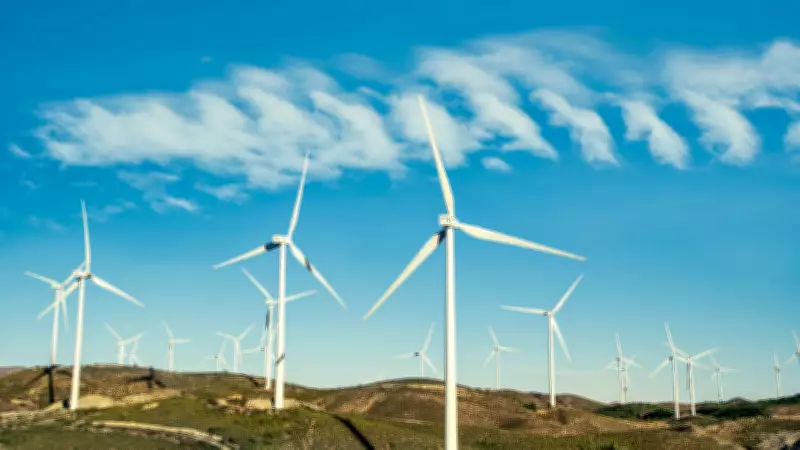
China has installed a world record-breaking floating offshore wind turbine with a capacity of 16 megawatts, marking a significant milestone in clean energy and offshore wind turbine technology. The turbine, nicknamed the 'Three Gorges Pilot,' is expected to generate enough electricity to power approximately 4,200 homes each year. Designed specifically for deep-sea areas where conventional offshore turbines cannot be deployed, this floating wind farm underscores the growing interest in such innovative facilities. Scientists believe that floating wind turbines can harness vast wind energy resources offshore and accelerate clean energy development.
What Makes This Floating Wind Turbine Unique
The new floating offshore wind turbine was developed by China Three Gorges Corporation and installed near Yangjiang in Guangdong Province. Unlike traditional offshore wind turbines that are mounted directly into the seabed, this technology features a semi-submersible floating platform equipped with state-of-the-art anchoring mechanisms. The turbine boasts a power generation capacity of 16 megawatts and an enormous rotor diameter of 252 meters. The tip of its blade stands over 270 meters above sea level, making it one of the largest and highest floating wind turbines ever constructed. According to company sources, the structure is designed to withstand extremely harsh marine conditions, including waves exceeding 20 meters and winds equivalent to a Category 5 hurricane.
Experts from the State Key Laboratory of Coastal and Offshore Engineering at Ocean University of China, along with offshore renewable energy engineers, highlight the growing need for floating platforms. Much of the shallow coastline suitable for traditional offshore wind farm installation is now fully utilized or geographically restricted.

Why Deep-Water Wind Energy Matters
Floating wind power technology is considered one of the next frontiers in renewable energy production. Offshore sites in deep waters farther from shorelines typically experience higher winds, enabling greater power output. Fixed-bottom foundations, common for traditional offshore wind farms, become impractical and cost-prohibitive in deeper waters. Floating turbines offer a solution, allowing renewable energy facilities to be established in deep waters.
Engineers report that this project utilizes a specially designed dynamic sub-sea cable system, flexible enough to adapt to ocean conditions and transmit electricity safely to shore. The majority of the turbine system was constructed onshore before being towed to its offshore location. It is estimated that this floating wind turbine will generate approximately 44.65 million kilowatt-hours of electricity annually, sufficient to power 4,200 households each year.
Engineering Challenges Behind Floating Wind Farms
Constructing floating wind turbines in deep ocean waters is among the most complex processes in renewable energy engineering. Such offshore power plants must withstand constant fluctuations induced by waves, currents, and storms to ensure reliable energy generation. According to research titled 'Development and Future Challenges of Offshore Floating Wind Turbine Technologies in China,' the turbine base includes suction anchors, heavy anchor chains, and high-performance polyester mooring cables to stabilize the structure. Additionally, ballasting technologies minimize vibration during operation.
Industry experts claim that with advancements in floating wind energy technologies and decreasing installation costs, offshore projects may rapidly expand into the deepest oceans.
How China Is Expanding Renewable Energy Innovation
China has made substantial investments in renewable energy infrastructure over the past decade, from solar farms to hydroelectric systems to offshore wind projects. The construction of the world's largest floating wind turbine demonstrates China's increasing development of advanced renewable energy systems to reduce its carbon footprint. It also reflects a global trend toward building larger renewable energy systems offshore. According to energy experts, floating wind farms will be crucial for nations with limited coastline but significant offshore wind energy potential.
With growing concerns over climate change and electricity consumption, projects like the 'Three Gorges Pilot' may prove influential in the coming years.