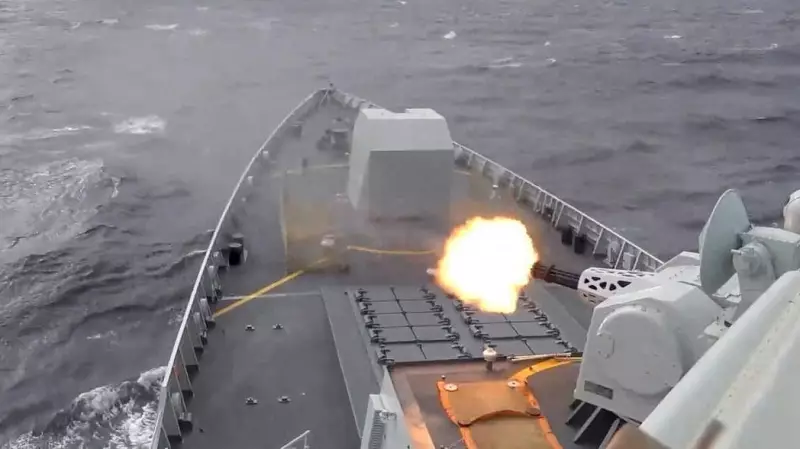
China has initiated a significant military mobilisation, deploying forces across its army, navy, and air force for extensive live-fire exercises in the vicinity of Taiwan. The drills, announced for Tuesday, have led to the closure of multiple maritime and aerial zones around the self-ruled island, marking a notable escalation in regional military activity.
Scope and Scale of the Military Exercises
Chinese authorities confirmed that the live-fire drills would necessitate the sealing off of seven distinct zones of ocean and airspace surrounding Taiwan. This coordinated manoeuvre represents a comprehensive demonstration of military readiness and capability. The mobilisation involves assets from the People's Liberation Army (PLA) across all domains—land, air, and sea—highlighting the drill's integrated and large-scale nature.
The announcement, reported by the International New York Times and dated 29 December 2025, indicates a precise and planned operation. The specific timing and the public declaration of closed zones are seen as a clear signal of Beijing's intent. Such exercises are closely monitored by global observers as indicators of stability or tension in the critical Taiwan Strait.

Timing and Strategic Implications
The scheduling of these live-fire exercises for a Tuesday points to a deliberate and structured military operation. The closure of seven zones for live-fire practice effectively disrupts normal civilian and potentially commercial transit in those areas, underscoring the seriousness of the drills.
Analysts view these actions as part of a broader pattern of military pressure exerted by Beijing on Taipei. The integrated use of land, air, and naval forces simulates a realistic combat scenario, testing command, control, and joint operational capabilities in a theatre of high strategic importance to China.
Regional Reactions and Future Outlook
This development is certain to draw sharp reactions from Taiwan and its international partners, potentially heightening diplomatic tensions. The live-fire drills near Taiwan serve as a potent reminder of the ongoing sovereignty dispute and the ever-present risk of miscalculation in one of Asia's most volatile flashpoints.
The international community, particularly nations with interests in the freedom of navigation and regional security in the Asia-Pacific, will be watching the situation closely. The scale of this mobilisation suggests that China is continuing its policy of using military demonstrations to assert its territorial claims. The long-term consequences will depend on the responses from Taipei and other capitals, and whether such exercises become a more frequent or intensified feature of the cross-strait dynamic.