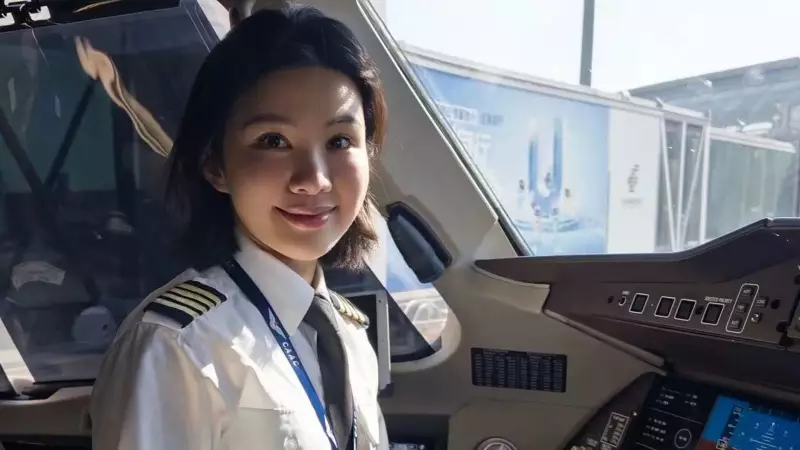
In a landmark move for both its aviation industry and gender representation, China has appointed its first female captain to pilot the nation's flagship domestically developed passenger aircraft. Captain Wu Qi will now command the narrow-body C919 jet, a symbol of China's technological ambitions in the competitive aerospace sector.
A Historic Appointment in the Cockpit
The appointment was officially announced by the state-owned Commercial Aircraft Corporation of China (COMAC), the manufacturer of the C919. Captain Wu Qi, a highly experienced pilot, has undergone extensive training to handle the advanced aircraft. This decision marks a significant step forward in breaking the traditional gender barriers often associated with commercial aviation, particularly in the command seat of a nationally significant project.
The C919 itself is China's answer to the dominant Airbus A320 and Boeing 737 families of aircraft. Its development represents a multi-billion dollar investment and a cornerstone of the country's "Made in China 2025" industrial strategy. Having a female captain at the helm of such an emblematic aircraft sends a powerful message about inclusivity and modernisation within the industry.

The C919: China's Aviation Ambition Takes Flight
The C919 completed its maiden commercial flight in May 2023, operated by China Eastern Airlines. Since then, it has been gradually entering service on domestic routes. The aircraft is designed to carry between 158 and 168 passengers and is seen as crucial for reducing China's dependence on foreign aerospace technology. While it relies on some Western-supplied components, including engines, its airframe and integration are domestic achievements.
Captain Wu's new role is not just a personal achievement but is also framed within the broader narrative of national progress. Chinese state media has highlighted her appointment as a dual milestone: advancing the country's aviation capabilities and promoting gender equality in a high-skills field. Her journey and training to qualify for the C919 will likely be showcased as an inspiration for future generations of aviators in China.
Implications for Global Aviation and Gender Parity
This development places China among a growing number of nations actively promoting women in aviation leadership roles. While female pilots remain a minority globally, such visible appointments help challenge stereotypes and encourage more women to pursue careers in piloting and aerospace engineering.
For COMAC, having a diverse and skilled pool of pilots, including accomplished women like Captain Wu, is essential for the long-term operational success and international credibility of the C919 program. As the aircraft seeks certification and potential future orders from airlines outside China, demonstrating a world-class, inclusive operational standard becomes part of its appeal.
The move underscores a strategic blend of technological nationalism and social progress. By putting Captain Wu Qi in command of the C919, China is not only showcasing a homegrown technological marvel but also aligning its image with contemporary values of diversity and equal opportunity. This story is set to resonate both domestically, as a point of national pride, and internationally, as a notable moment in the evolving landscape of global aviation.