

The Kapurthala administration on Monday announced a major eco-tourism boost for the languishing Kanjli Wetland in Kapurthala, yet again. The plans for this boost involve myriad new structures promised at the wetland for its development.
Project Details
Kapurthala Deputy Commissioner (DC) Akash Bansal declared that the tourism project would come up at a total cost of Rs 19.56 crore for Kanjli Wetland. The DC said the project, aimed at sustainable tourism and environmental conservation, has been sanctioned by the Punjab government under the Union Ministry of Tourism SD-2 (Swadesh Darshan 2.0) scheme. It aims to transform the wetland into a premier eco-tourism destination while preserving its ecological significance.
Spread across 183 acres, the Kanjli Wetland is the only Ramsar site in Doaba. Once a wetland attracting thousands of winged visitors and bustling with aquatic life, Kanjli has suffered in recent years.

Declining Biodiversity
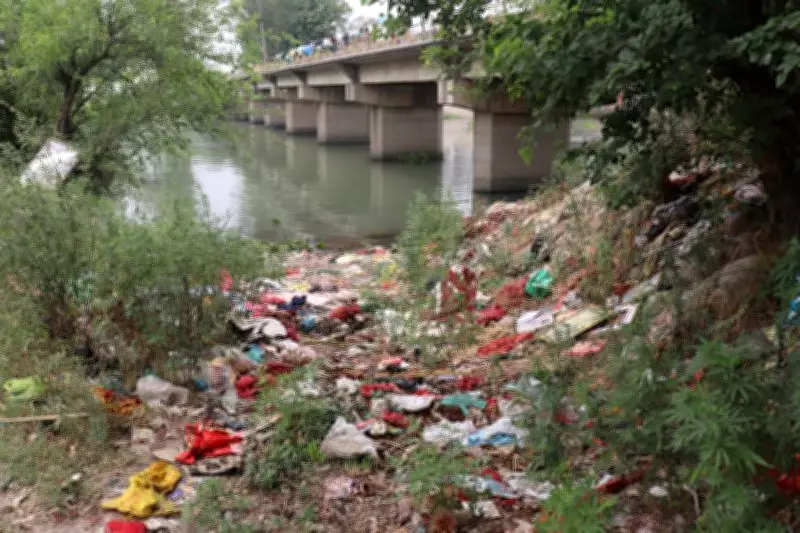
The arrival of migratory birds at Kanjli Wetland has declined significantly, with their numbers continuing to dwindle. Residents reported that pollution from nearby drains, along with encroachments and disturbances along the banks of the Bein and the wetland, has already caused considerable damage to the wetland's local biodiversity. Kanjli has already undergone local revamps from time to time.
Sharing details for the upcoming project, the DC said it would include modern access and parking facilities, traffic management, digital ticketing system, interpretation center, landscaping, internal roads, drainage infrastructure, information and directional signage, public amenities, souvenir and retail shops, food and beverage arrangements, residential units, experiential tourism activities, modern power infrastructure, and CCTV-based systems for security. The DC added that under the scheme, tourism infrastructure in the area will be strengthened and new employment opportunities will be created for local people through eco-tourism-related activities. A new helpline, 01822-233-777, was also issued for citizens to report problems or seek help.
Local Concerns
Gurmukh Singh, a Kapurthala resident and biodiversity enthusiast, expressed concerns: "Migratory birds aren't coming to the Kanjli Wetland anymore. There are two main causes. One of the Sarkanda (reed or tall pampas grass) and grass ecosystems, once bustling at the wetland, isn't thriving anymore. The vegetation is used to attract the birds. Secondly, around the same time as the birds arrive, Chath festivities take place during which vast amounts of flowers, fruits, prasad, disposable plates, etc. are dumped into the Kanjli and crackers are also burst on banks, which has played a role in dramatically reducing the activity of the birds."
Singh added, "Several revamps have been promised from Kanjli time and again. But a wetland's biodiversity needs to thrive first to sustain tourism. Water hyacinth removed time and again from Kanjli keeps coming back. With vegetation and bird populations suffering already, creating more concrete structures or tourism outlets at Kanjli may not be the best idea to protect the sensitive ecology here. It needs trees, indigenous plants and cleaner waters to attract birds again."
Maj Gen Balwinder Singh (Retd), State Convener of INTACH, said, "INTACH, Punjab chapter, had called for restoration efforts for Kanjli in 2025. Since INTACH also runs a natural heritage division, and we studied the Ramsar sites across Punjab. The road to Kanjli's revival and conservation has to be in an eco-friendly and scientific manner. The weeds that choke the wetland need to be removed and local biodiversity encouraged. More concrete or structures will only choke the wetland."
Past Revamp Efforts
Kanjli tourism projects through the years: In 2020, during a similar promised revamp, a cafe, restaurant, 3-km long walkway, and boating facilities were promised at Kanjli by the then district administration under DC Deepti Uppal. In 2021, Rs 5 crore had been earmarked for a project meant for the wetland. It received a ticket counter, a bamboo restaurant, and several temporary structures which presently lie in disarray. An exercise to cleanse the wetland of water hyacinth had also been started under environmentalist Balbir Singh Seechewal in 2022.






