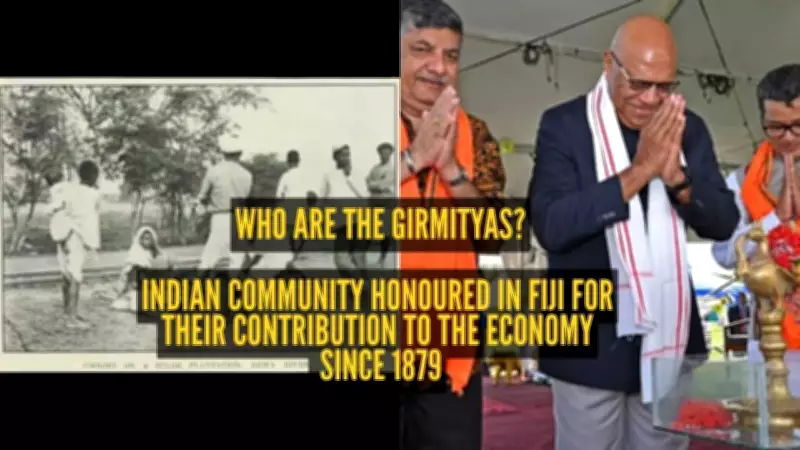
The blood, sweat, and tears of thousands of Indians across the world formed the foundation of the British Empire that colonized and exploited the country for nearly 200 years. While some resided in the country, others were made indentured labourers and forced to leave their homeland for another country that would fill the empire's coffers.
The Origins of Indentured Servitude
The year was 1834, when African slaves were liberated and the British Empire had abolished slavery. However, for an empire built on human exploitation, the abrupt halt of the supply of cheap labour was hurting business. Thus, officials came up with the idea of indentured servitude, where a labourer would sign a nominal contract for a fixed period and receive a pittance as wages. The victims of these agreements were Indians and Chinese.
Soon, middlemen called Arkatis made false promises of employment to small workers and made them sign an agreement of five years. With most such people being illiterate, they had trouble pronouncing the word "agreement," which is why they resorted to calling it 'Girmit' and the term 'Girmitya'. The Girmityas from India were sent to Mauritius, British Guiana, Natal, Trinidad, Fiji, Jamaica, Suriname, and the Reunion Islands. Although they lived a difficult life, they helped the economies of the countries they were sent to. Recently, Fiji honored the Girmityas who shaped the nation's economy and culture.

Fiji Honors Girmityas
Fiji marked the 147th Girmit Commemoration through ceremonies, cultural tributes, and historical remembrance, honoring the legacy of the Girmityas. The event commemorated the arrival of the first indentured labourers aboard the Leonidas on May 14, 1879, and recognized the contribution of more than 60,000 Girmityas who came to Fiji between 1879 and 1916 under the indenture system.
At the Fiji Museum, Minister for Public Enterprises, Multi-Ethnic Affairs, Culture, Heritage and Arts, Charan Jeath Singh officiated at the 147th Girmit Commemoration themed "From Roots to Wings, Carrying the Girmit Flame Forward."
Speaking during the commemorations, Minister for Lands and Mineral Resources Filimoni Vosarogo said the occasion was not only about remembering hardship but honoring the courage and determination of the Girmitiyas whose sacrifices helped shape modern Fiji. "Today, we did not gather merely to remember hardship. We gathered to honor the quiet, unyielding courage that turned adversity into one of the strongest foundations Fiji has ever known," he said.
The Leonidas arrived in Fiji carrying 463 men, women, and children bound by the Girmit system. They preserved their language, faith, music, festivals, and traditions despite facing hardships.
During the event, around 20 descendants of Girmityas were presented with plaques recognizing their ancestral legacy and contribution to Fiji. Moreover, a refurbished Syria Monument was unveiled at the Syria Park in Nausori by Minister Charan Jeath Singh. The monument commemorates the wreck of the Syria at Nasilai Reef on May 11, 1884, where 56 indentured labourers and three lascars lost their lives while traveling to Fiji under the Girmit system.
Educational and Cultural Initiatives
Across the country, educational and cultural initiatives were also introduced to preserve Girmit history. At the University of Fiji's Saweni Campus, a replica of the Leonidas was unveiled as part of the Girmit commemoration. Meanwhile, Girmit researcher Kirti Sharma released a new animated educational film titled The Story of Girmit, aimed at helping children understand the history and struggles of indentured labourers in Fiji.
Between 1879 and 1916, some 60,537 Indians arrived in Fiji as indentured labourers. The system officially ended in 1916, with the last contracts expiring by 1920 due to widespread criticism and resistance. Today, the descendants of Girmits make up a significant portion of the country's population, and May 14 is commemorated as Girmit Day.