

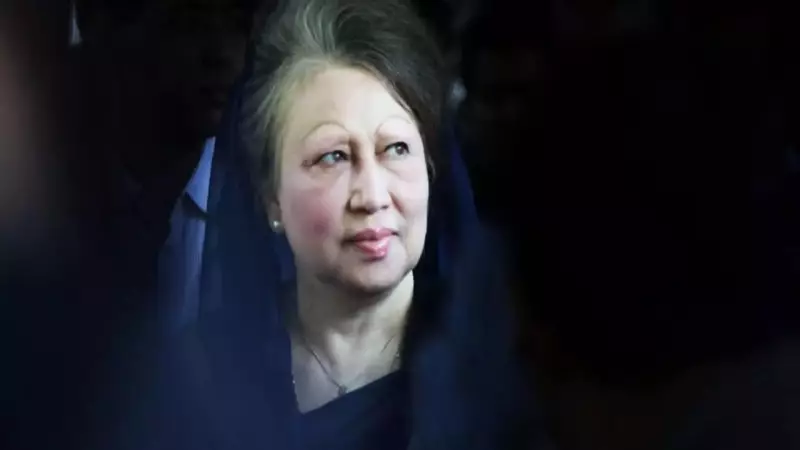
Bangladesh's political landscape was shaken on early Tuesday with the passing of Khaleda Zia, the country's former prime minister and a towering figure in its politics for decades. She was 80 years old.
A Political Rivalry That Defined an Era
For years, Khaleda Zia stood as the principal opponent to Sheikh Hasina, the current long-serving leader of Bangladesh. The intense rivalry between these two women has been the central axis of the nation's politics. According to reports, Sheikh Hasina is now living in exile in New Delhi, having been forced to flee amid widespread unrest across the country.
Khaleda Zia carved her name in history by becoming the first woman in Bangladesh to hold the office of Prime Minister. Her influence and legacy have left an indelible mark on the nation's democratic journey.

Final Days in Critical Care
The end came at Dhaka's Evercare Hospital, where Zia had been receiving intensive medical attention. She had been in a critical condition for several days and was under treatment in the hospital's Intensive Care Unit (ICU) leading up to her passing.
Her death coincides with a period of significant political transition for Bangladesh. It comes just days after her son, Tarique Rahman, made a dramatic return to his homeland. Rahman ended 17 years of self-imposed exile in London as the country moves towards a crucial electoral phase.
A Nation at a Political Crossroads
The timing of Khaleda Zia's death adds a profound layer of complexity to Bangladesh's immediate future. With pivotal elections on the horizon, the absence of one of its most prominent and controversial leaders creates a major vacuum in the opposition space.
The return of her son, Tarique Rahman, after nearly two decades abroad, is now set against the somber backdrop of his mother's passing. This sequence of events is expected to have substantial repercussions on the political dynamics and the upcoming electoral process in Bangladesh.
The nation now mourns the loss of a leader who was both revered and contested, a woman who broke barriers and spent a lifetime at the forefront of its most fierce political battles.






