

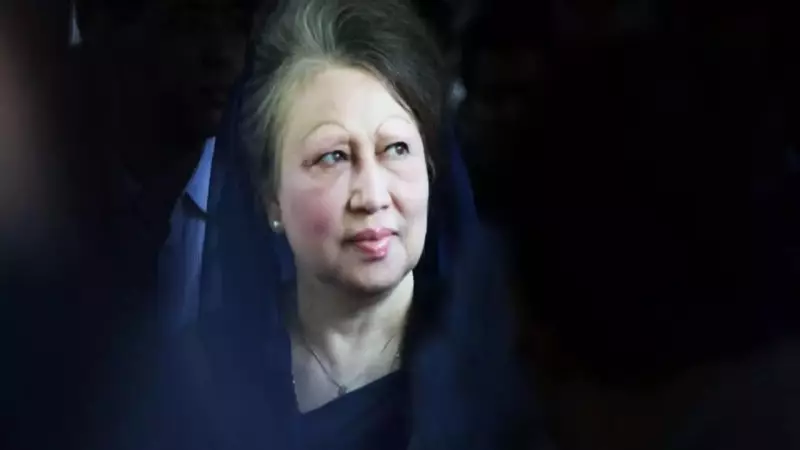
In a significant development for Bangladesh's political landscape, former Prime Minister and Bangladesh Nationalist Party (BNP) chairperson Khaleda Zia passed away in the early hours of Tuesday. She was 80 years old. Party officials confirmed her death at Evercare Hospital in Dhaka, where she had been undergoing intensive medical treatment for several months.
A Political Journey Forged in Tragedy
Khaleda Zia's entry into politics was born out of personal tragedy. Born in 1945 in Jalpaiguri and raised in Dinajpur, she married Ziaur Rahman in 1960. Her husband later seized power as a military chief and became President of Bangladesh in 1977. Following his assassination in a military coup in 1981, Khaleda Zia, who had previously shown little interest in public life, stepped into the political void.
She took charge of the Bangladesh Nationalist Party in 1984 and quickly emerged as a central figure in the mass movement against the military rule of H.M. Ershad. Her reputation as an uncompromising leader in the fight to restore democracy propelled her to the forefront of national politics. In 1991, she led the BNP to a historic victory, becoming Bangladesh's first elected woman prime minister. Her tenure saw the introduction of the parliamentary system and she later played a key role in establishing the caretaker government system for holding national elections.

Decades of Rivalry and Legal Battles
Khaleda Zia served as the country's prime minister twice, from 1991 to 1996 and again from 2001 to 2006. Her political career was overwhelmingly defined by her fierce and enduring rivalry with Sheikh Hasina of the Awami League, a contest that shaped the nation's politics for over three decades.
In her later years, Zia faced a series of corruption convictions, which her party and supporters consistently denounced as politically motivated. She was imprisoned in 2018. Granted temporary release in 2020 on health grounds, she remained largely confined to her home due to severe illness. In a significant turn of events, the Supreme Court acquitted her in the final corruption case in January 2025, effectively clearing her name legally.
Final Months and Enduring Legacy
Khaleda Zia had been suffering from a multitude of serious health issues, including complications related to her heart, lungs, liver, and kidneys, alongside diabetes and pneumonia. Her condition had been critical for months, with intensive care provided since November last year. Her death occurred around 6:00 am, shortly after Fajr prayers.
Her passing comes just days after a major political shift: her elder son and BNP's acting chairperson, Tarique Rahman, returned to Bangladesh from London, ending 17 years of self-imposed exile. This return coincided with the country's movement toward crucial national elections.
Following the ouster of Sheikh Hasina in a mass uprising in 2024, an interim government led by Nobel laureate Muhammad Yunus permitted Zia to travel abroad for advanced medical treatment. She returned from London in May 2024 but remained gravely ill, withdrawing from active politics while retaining the symbolic title of BNP chairperson until her death.
Khaleda Zia is survived by her elder son, Tarique Rahman. Her younger son, Arafat Rahman Koko, passed away in 2015. Despite years marked by illness, legal battles, and imprisonment, Khaleda Zia remains one of the most influential and polarising figures in the history of Bangladesh, a leader whose life was inextricably linked with the nation's turbulent democratic journey.






