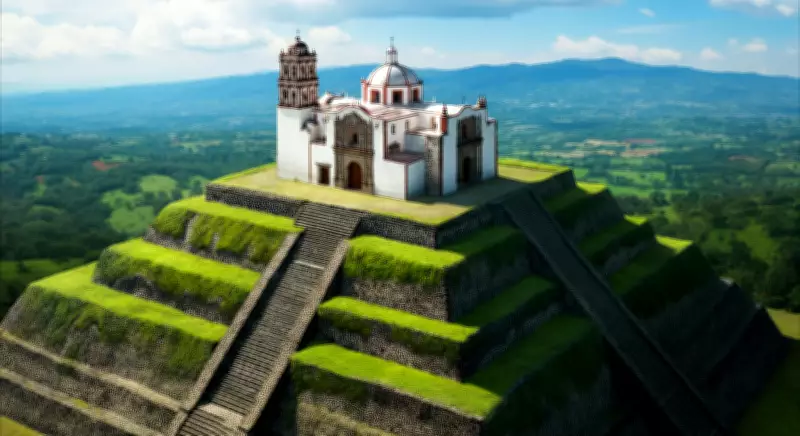
The Hidden Giant of the Ancient World
When considering the greatest monuments of antiquity, the mind often turns to the sun-scorched deserts of Egypt, envisioning the precise geometry of the Giza plateau. Yet, this perspective overlooks a colossal marvel: the Great Pyramid of Cholula in the Mexican Highlands. Unlike its Egyptian counterparts, this pyramid is concealed beneath layers of grass, trees, and even an old colonial church, leading many to mistake it for a natural hill.
Volume Over Height: A New Perspective
The Great Pyramid of Cholula, known in Nahuatl as Tlachihualtepetl ("man-made mountain"), holds the title for the largest pyramid by volume. While the Great Pyramid of Giza originally stood 146.6 meters tall, Cholula's massive footprint of 450 by 450 meters gives it nearly twice the volume. This shift in criteria from height to structural volume redefines the global leaderboard of ancient pyramids.
1. The Great Pyramid of Cholula
Located in Puebla, Mexico, this monument was constructed over nearly a thousand years by successive Mesoamerican cultures. When Spanish forces arrived, the overgrown structure was mistaken for a hill, leading them to build a church on its summit. Today, it remains the world's largest pyramid by volume.

2. The Great Pyramid of Giza
This Egyptian marvel, built with an estimated 2.3 million stone blocks, remains an engineering benchmark. Despite its fame, it ranks second in volume behind Cholula.
3. The Pyramid of Khafre
Located near the Great Pyramid in Giza, Khafre is the second-largest Egyptian pyramid. Its higher bedrock foundation and preserved casing stones often mislead visitors into thinking it is the tallest.
4. The Red Pyramid
Found at Dahshur, Egypt, the Red Pyramid is considered the first true smooth-sided pyramid, built by King Sneferu.
5. The Bent Pyramid
Also at Dahshur, this pyramid features a unique bent shape due to mid-construction angle changes to prevent instability.
The Challenge of Measuring Ancient Structures
Estimating volumes of ancient pyramids is complex due to erosion, collapse, and scavenging. According to UNESCO, exact calculations are often educated guesses. At Cholula, the structure remains deliberately undisturbed, preserving the church atop its peak. Historians view this uncertainty as a testament to the remarkable abilities of ancient civilizations, who transformed landscapes into man-made mountains using stone or clay bricks.