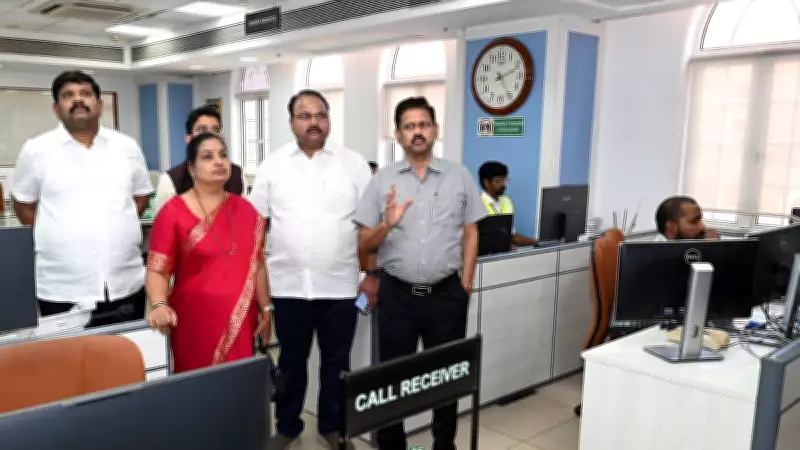
A civic delegation from the twin cities of Hubballi and Dharwad in Karnataka recently visited Mumbai to study the urban governance model of the Brihanmumbai Municipal Corporation (BMC). The delegation reportedly appreciated the scale and functioning of the BMC and expressed interest in expanding cooperation and institutional exchanges in various sectors in the future.
Delegation's Objectives
The visit aimed to understand the best practices of the BMC, which is one of the largest municipal corporations in Asia. The delegation sought insights into waste management, urban planning, revenue generation, and citizen services. The BMC's ability to handle a population of over 12 million and its robust infrastructure were key areas of interest.
Key Highlights of the Visit
During their stay, the delegation toured several BMC facilities, including waste processing plants, sewage treatment facilities, and municipal schools. They also held meetings with senior BMC officials to discuss governance strategies. The delegation expressed admiration for the BMC's use of technology in service delivery, such as the MCGM mobile app for citizen complaints and property tax payments.

The BMC's decentralised ward system and its approach to disaster management were also studied. The delegation noted that the BMC's model could be adapted to improve urban governance in Hubballi-Dharwad, which are growing rapidly.
Future Cooperation
Both sides agreed to explore formal agreements for knowledge sharing. Areas of potential collaboration include solid waste management, digital governance, and capacity building for municipal staff. The delegation also invited BMC officials to visit Hubballi-Dharwad to understand the unique challenges and opportunities there.
The visit was part of a broader initiative by the Karnataka government to learn from successful urban governance models across India. Hubballi-Dharwad, which are governed by a single municipal corporation, have been seeking to improve their efficiency and service quality.
The delegation's report is expected to be submitted to the Karnataka government, which may consider implementing some of the BMC's practices. The successful exchange of ideas highlights the importance of inter-city learning in improving urban governance in India.