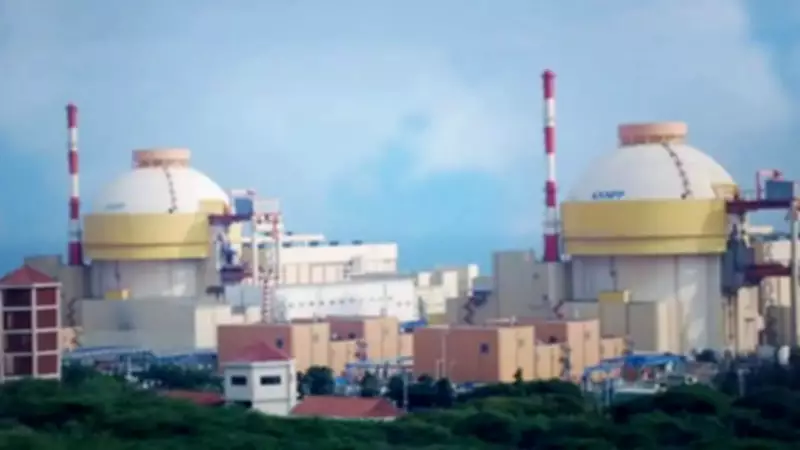
Kudankulam Nuclear Project Achieves Key Milestone with Reactor Vessel Installation
MUMBAI/NEW DELHI: India achieved a significant milestone in its nuclear power expansion program on Monday with the successful installation of the reactor pressure vessel (RPV) at Unit-5 of the Nuclear Power Corporation of India Limited's (NPCIL) Kudankulam Nuclear Power Project. This facility is one of the country's largest atomic energy complexes.
The installation of the 320-tonne reactor pressure vessel inside the reactor building marks the beginning of the erection of key Nuclear Steam Supply System equipment. This is considered one of the most critical construction stages in a nuclear power project.
Boosting India's Energy Security
The 1,000 MW Unit-5 reactor will add reliable, round-the-clock electricity to India's power grid, helping meet growing demand from homes, industries, and infrastructure. Unlike solar and wind power, nuclear energy can generate electricity continuously, strengthening energy security and reducing dependence on coal. The project will also support India's clean-energy transition by lowering carbon emissions while contributing to economic growth, job creation, and long-term energy self-reliance.

Safety and Coordination
NPCIL stated that the operation was carried out after receiving Major Equipment Erection clearance from the Atomic Energy Regulatory Board. The vessel was lifted and positioned using specialized heavy-lift cranes while adhering to prescribed safety and quality protocols.
The reactor pressure vessel is regarded as the heart of a nuclear power plant, housing the reactor core where nuclear fission takes place to generate electricity. Officials noted that the milestone reflects coordination between NPCIL and Russia's Atomstroyexport, which is associated with the project.
India's Nuclear Power Ambitions
The development comes as India seeks to expand its non-fossil fuel energy capacity to meet rising electricity demand while reducing carbon emissions. Nuclear power has emerged as a key component of the Centre's long-term strategy to achieve energy security and support its net-zero ambitions.
Kudankulam Complex Overview
Located in Tamil Nadu, the Kudankulam complex comprises six reactors of 1,000 MW each. Units 1 and 2 are already operational and together have generated around 130 billion units of electricity since commissioning, according to NPCIL. The utility said this has helped avoid an estimated 112 million tonnes of carbon dioxide-equivalent emissions.
Units 3 and 4 are at an advanced stage of construction, while Units 5 and 6 are being built in phases. Once all six reactors become operational, the site will have a total installed capacity of 6,000 MW, making it among the country's largest nuclear power generation hubs.
Significance for India's Future
The milestone assumes significance at a time when India is pursuing an ambitious expansion of nuclear energy under the Centre's vision of a developed nation by 2047. Policymakers have increasingly highlighted the role of nuclear power as a reliable source of round-the-clock, low-carbon electricity that can complement renewable energy sources such as solar and wind.
NPCIL said it remained committed to maintaining the highest standards of nuclear safety, quality assurance, and environmental protection while advancing the country's clean-energy goals.