

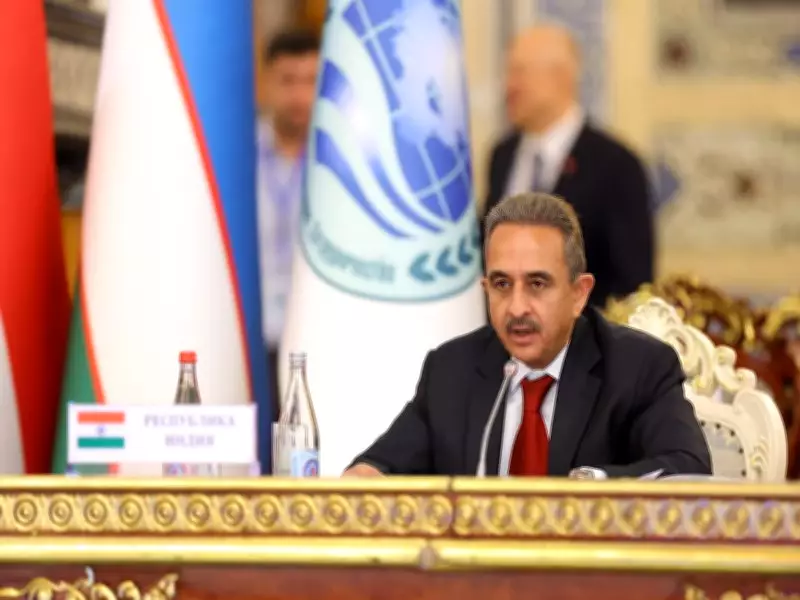
Minister of State for External Affairs Kirti Vardhan Singh reaffirmed India's enduring commitment to its partnership with Central Asia and the Shanghai Cooperation Organisation (SCO) during a two-day official visit to Tajikistan. The visit culminated in his participation in the SCO Conference titled "Central Asia - The Core of SCO: A Space of Peace and Joint Development" held in Dushanbe.
India's Strategic Vision for the SCO
During the conference, Singh outlined India's strategic vision for the bloc. He announced that India would host the inaugural edition of the SCO Civilisation Dialogue Forum in Kolkata from July 17-19, 2026. Prime Minister Narendra Modi is scheduled to inaugurate the forum and deliver the keynote address. The forum aims to deepen mutual understanding, promote intercultural dialogue, and celebrate the shared heritage and arts of SCO member states.
Reaffirmation of Commitment
In a post on X, Singh reaffirmed India's commitment to an enduring partnership with Central Asia and the SCO. He highlighted India's priorities within the organisation, including youth engagement, cultural exchanges, strengthening regional connectivity, and civilisational linkages. He specifically noted India's hosting of the first SCO Civilisation Dialogue Forum in Kolkata next month.

India views Central Asia as its "extended neighbourhood" and a vital partner in fostering regional prosperity, security, and economic integration.
25th Anniversary of the SCO
Singh highlighted the 25th anniversary of the organisation as a pivotal moment for both reflection and strategic adjustment in the face of a volatile global order. He stated, "This year, 2026, marks the 25th Anniversary of the Shanghai Cooperation Organisation. It is indeed an opportune moment for reflection on our achievements and also a time for recalibration, keeping in mind the ongoing disruptions in the world order."
Unique Leadership Structure
Singh emphasised the unique significance of the current leadership structure within the bloc. He noted that the presidencies of its two supreme decision-making bodies—the Council of Heads of State and the Council of Heads of Government—are currently held by Kyrgyzstan and Tajikistan, respectively. He described this as a historic opportunity to leverage Central Asian leadership to celebrate the organisation's foundational successes while actively shaping its future trajectory. The Minister described this as a critical moment for "recalibration," necessitated by ongoing disruptions affecting the global geopolitical landscape.
Shared Heritage and Civilisational Links
Reflecting on the shared heritage of the member states, Singh underscored that the SCO region is unified by a deep, enduring history of cross-civilisational exchange. He noted that the region has long served as a hub where civilisations did not merely trade goods and services but also synthesised ideas, cultural values, and collective knowledge to enrich human progress.
For India, the Minister reaffirmed that the SCO serves as more than just a regional forum; it functions as a vital bridge, reconnecting India with its traditional partners across the Eurasian landmass. He said, "The SCO region is bound together by a rich and enduring history. This has been a region where civilisations flourished, interacted, competed, learned from one another, and collectively enriched human progress. For centuries, our peoples exchanged not only goods and services, but also ideas, knowledge, culture, and values. For India, the Shanghai Cooperation Organisation is not merely a regional grouping; it is a vital link connecting us with our historical and civilisational partners across Eurasia."






