Indian Traveller Detained in Bangkok for Smuggling Endangered Monkeys
Smuggling protected wildlife is a serious criminal offence in most countries, carrying strict penalties due to its severe impact on biodiversity, biosecurity, and conservation efforts. The illegal trade in animals is often driven by demand for exotic pets, private collectors, or black-market resale, and it remains one of the most profitable forms of transnational crime globally.
Incident at Suvarnabhumi Airport
An Indian traveller was recently detained at Suvarnabhumi Airport after Thai authorities discovered two endangered monkeys concealed inside his luggage, according to a report by Thai media outlet The Nation Thailand. The incident occurred on February 3 during routine passenger screening at Bangkok’s main international gateway. Customs officers, working alongside a wildlife inspection team, stopped the passenger before departure after officials described suspicious behaviour or intelligence flagged during checks.
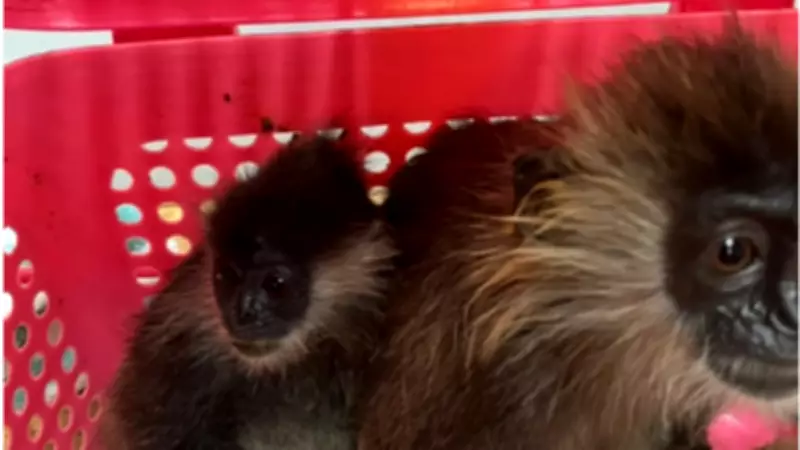
A subsequent inspection of his baggage revealed two live primates hidden among his personal belongings. The animals were identified as Indochinese lutungs, also known as silvered leaf monkeys, which are listed as endangered species and are strictly protected by wildlife conservation laws. Indochinese lutungs are native to the Southeast Asian region and are threatened by habitat destruction and wildlife trade.

Legal Proceedings and Value of Seizure
According to authorities, the monkeys were being transported with the intention of flying them to India. Officials estimated their combined value at approximately 100,000 Thai baht, underscoring the lucrative nature of exotic wildlife trafficking. Santanee Phairattanakorn, director of the Passenger Inspection Customs Office at the airport, confirmed the seizure. “The inspection revealed two live Indochinese Lutungs hidden amongst personal items. The animals were immediately seized, and the suspect was taken into custody to face legal proceedings,” she was quoted as saying by The Nation Thailand.
Thai authorities have initiated legal proceedings against the traveller under the country’s Wild Animal Conservation and Protection Act, which prohibits the illegal export of protected species. Additional charges have been filed under the Customs Act for attempting to take undeclared goods out of the country. Officials emphasised that the Indochinese lutung is protected not only under Thai law but also through international conservation agreements aimed at curbing cross-border wildlife trafficking.
Global Conservation Efforts
Such safeguards are usually further strengthened by global agreements such as the Convention on International Trade in Endangered Species of Wild Fauna and Flora (CITES), which is an international agreement designed to regulate the trade of endangered plants and animals. Smuggling of wildlife has remained a major concern in the Southeast Asian region, which has been known to be both a source and transit point for the smuggling of illegal wildlife. Airports have become important points where authorities have been trying to intercept trafficked animals, including reptiles, birds, and exotic mammals.
Rehabilitation and Future Measures
After the confiscation, the rescued monkeys were turned over to wildlife experts for medical examination and rehabilitation. Authorities emphasized that it was important to ensure the health of the animals after the trauma of transportation and hiding. Thai customs officials reaffirmed their determination to improve passenger screening, enhance biosecurity, and dismantle wildlife trafficking rings.