

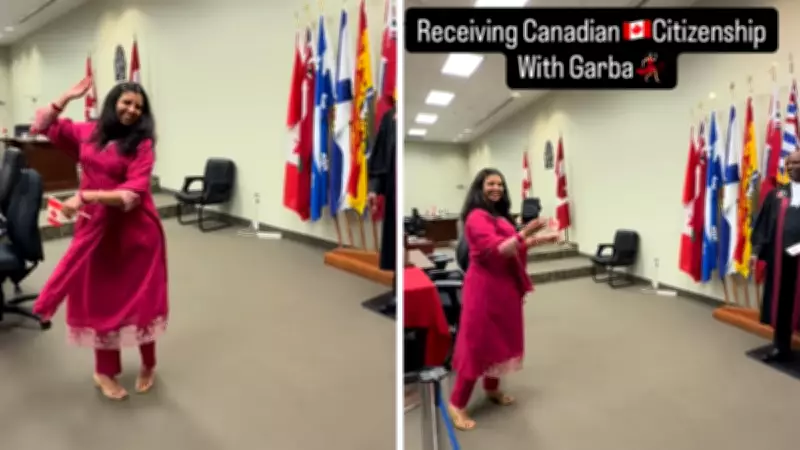
A video of an Indian woman celebrating her newly acquired Canadian citizenship by performing the traditional Gujarati folk dance Garba has taken the internet by storm, igniting a fierce debate about cultural identity, patriotism, and the meaning of citizenship.
The Viral Video
The clip, which has been widely shared on social media platforms, shows the woman dressed in a vibrant lehenga choli, dancing joyfully to Garba music while holding her Canadian citizenship certificate. The video was originally posted on Instagram and quickly amassed millions of views, with users from both India and Canada chiming in with their opinions.
Mixed Reactions Online
The reactions to the video have been polarized. Many viewers praised the woman for embracing her cultural roots even after moving abroad, calling it a beautiful blend of tradition and new beginnings. One user commented, "This is what integration looks like – you can love your new home while honoring where you came from." Others, however, criticized her for celebrating Canadian citizenship with an Indian dance, arguing that it undermines the significance of adopting a new nationality. A tweet read, "If you're so attached to Garba, why leave India? This is confusing."

Deeper Issues at Play
The debate has also touched upon broader themes of diaspora identity and the expectations placed on immigrants. Some netizens pointed out that cultural practices like Garba are not tied to political boundaries and can be celebrated anywhere. One user wrote, "Culture is not a passport. You can be Canadian and still dance Garba – that's the beauty of multiculturalism." Others argued that the woman's choice to highlight an Indian tradition during a Canadian milestone might be seen as a rejection of her new identity.
Several commentators noted that similar celebrations occur in other immigrant communities, such as wearing traditional attire at naturalization ceremonies. The video has sparked conversations about what it means to be truly integrated while maintaining one's heritage.
Expert Opinions
Sociologists and cultural commentators have weighed in on the matter. Dr. Priya Sharma, a professor of diaspora studies, stated, "This video reflects the complex emotions of many immigrants who navigate multiple identities. Celebrating citizenship with a cultural dance is not a contradiction; it's a testament to the fact that identity is multifaceted." Meanwhile, political analyst Rohan Mehta argued, "The backlash reveals a discomfort with dual loyalties, but in a globalized world, such hybrid expressions are becoming the norm."
The Woman's Response
In a follow-up post, the woman addressed the criticism, saying she was surprised by the backlash. She explained that Garba is a dance of joy for her, and she wanted to mark the occasion in a way that felt authentic. "I am proud to be Canadian, and I am proud of my Indian heritage. They are both part of me," she wrote. Her response has garnered support from many who see her actions as a celebration of diversity.
The incident has also sparked discussions about the pressures immigrants face to conform to a singular identity. Some users shared their own experiences of being criticized for holding onto traditions while embracing a new nationality.
Conclusion
The video of the Indian woman dancing Garba upon receiving Canadian citizenship has become a flashpoint for debates on cultural identity and patriotism. While opinions remain divided, the incident highlights the evolving nature of citizenship in an increasingly interconnected world. It serves as a reminder that identity is not a zero-sum game, and that celebrating one's roots does not diminish love for a new homeland.






