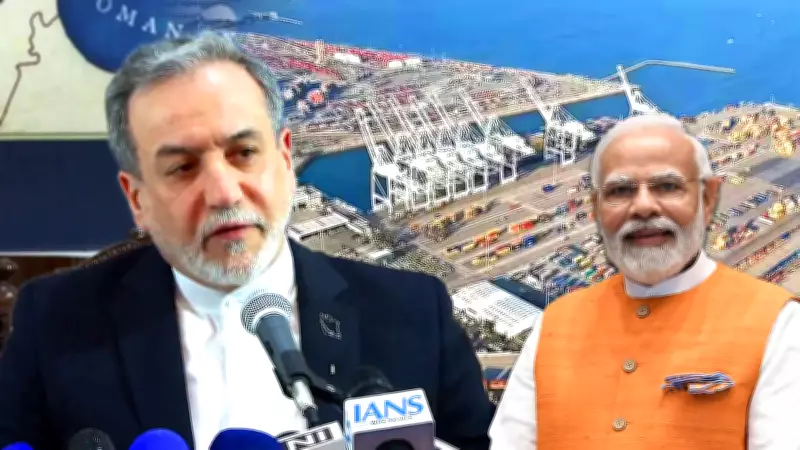
Iranian Foreign Minister Abbas Araghchi has described the Chabahar Port as a key symbol of India-Iran cooperation and urged India to continue investing in the strategically vital project despite challenges posed by US sanctions. Calling the port a “golden gate” for India’s access to Central Asia, the Caucasus, and Europe, Araghchi also emphasized that India could play a greater diplomatic role in promoting peace and security across the Persian Gulf region.
Chabahar Port: A Strategic Asset for India
The Chabahar Port, located in southeastern Iran on the Gulf of Oman, provides India with a crucial trade route to Afghanistan and Central Asia, bypassing Pakistan. The port is seen as a counterbalance to China’s Gwadar Port in Pakistan, part of the China-Pakistan Economic Corridor (CPEC). India has invested heavily in developing Chabahar, including building a terminal and linking it to Afghanistan via road and rail networks.
US Sanctions Pose Challenges
Despite its strategic importance, the project has faced delays and uncertainties due to US sanctions on Iran. The Trump administration had previously threatened sanctions on countries doing business with Iran, including India. However, India has continued to engage with Iran on Chabahar, seeking exemptions for the port’s development as a humanitarian and trade corridor. Araghchi’s remarks come at a time when India is balancing its ties with the US and its energy needs from Iran.

India’s Role in Persian Gulf Security
Araghchi further stated that India, as a major regional power, could contribute to peace and stability in the Persian Gulf. India has traditionally maintained good relations with both Iran and the Gulf Arab states, and its diplomatic influence could help de-escalate tensions. The Iranian minister’s comments highlight Iran’s expectation of India’s continued engagement in the region.
In summary, the Chabahar Port remains a cornerstone of India-Iran relations, with Iran urging India to maintain its investment and cooperation despite external pressures. The port is not only an economic gateway but also a symbol of strategic partnership, with potential implications for regional security and connectivity.