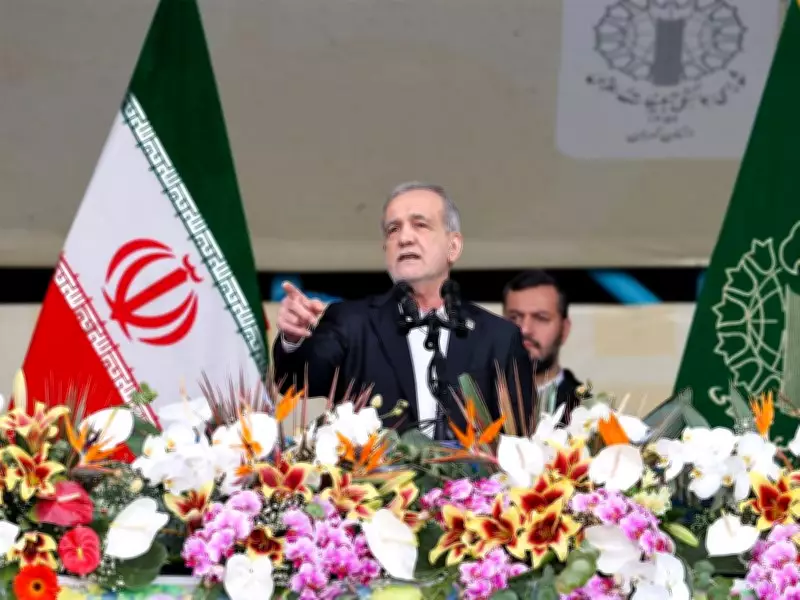
Iranian President Ebrahim Raisi has firmly stated that negotiations with Pakistan cannot take place under the shadow of blockades and threats, according to a message delivered to Pakistani Prime Minister Shehbaz Sharif. This statement comes amid rising tensions between the two neighboring countries, with Iran expressing its discontent over what it perceives as hostile actions from Pakistan.
Background of the Tensions
The relationship between Iran and Pakistan has been strained in recent months due to a series of incidents. Pakistan has reportedly imposed blockades on certain trade routes and has been accused by Iran of harboring militant groups that launch attacks on Iranian soil. These actions have led to a deterioration in diplomatic ties, with both sides engaging in heated rhetoric.
Iran's Stance
President Raisi emphasized that Iran is open to dialogue but only under conditions of mutual respect and without any form of coercion. He criticized Pakistan's approach, stating that blockades and threats are not conducive to peaceful negotiations. The Iranian president called for an immediate cessation of what he described as hostile measures.

Pakistan's Response
Prime Minister Shehbaz Sharif has not yet publicly responded to Iran's message. However, Pakistani officials have indicated that they are willing to engage in talks to resolve the issues. They have also denied allegations of supporting militant groups, calling for evidence to be presented through diplomatic channels.
Implications for the Region
The standoff between Iran and Pakistan has broader implications for regional stability. Both countries are key players in South Asia and the Middle East, and their conflict could affect security dynamics in Afghanistan and the wider region. International observers have urged both sides to exercise restraint and engage in constructive dialogue.
- Trade disruptions have already impacted local economies along the border.
- There are concerns about the potential for cross-border militant activity.
- Efforts by third-party mediators, including China and Saudi Arabia, have so far failed to bring the two sides to the table.
As tensions continue, the international community watches closely, hoping for a de-escalation that could pave the way for renewed cooperation between Iran and Pakistan.