

Iranian President Rejects US Demands
Iran's President Masoud Pezeshkian has firmly rejected U.S. demands, declaring that "no one can make us surrender" amid escalating tensions between the two nations. The statement came as Pezeshkian urged Washington to remove military threats while reinforcing Tehran's stance during talks with Iraqi officials.
IRGC Unveils New Security Plan
Meanwhile, Iran's Islamic Revolutionary Guard Corps (IRGC) has introduced a new security strategy for the Hormuz Strait, aimed at blocking supplies to U.S. military bases in the region. The plan includes deploying advanced naval assets and unconventional tactics to assert control over the strategic waterway.
Trump Pauses 'Project Freedom'
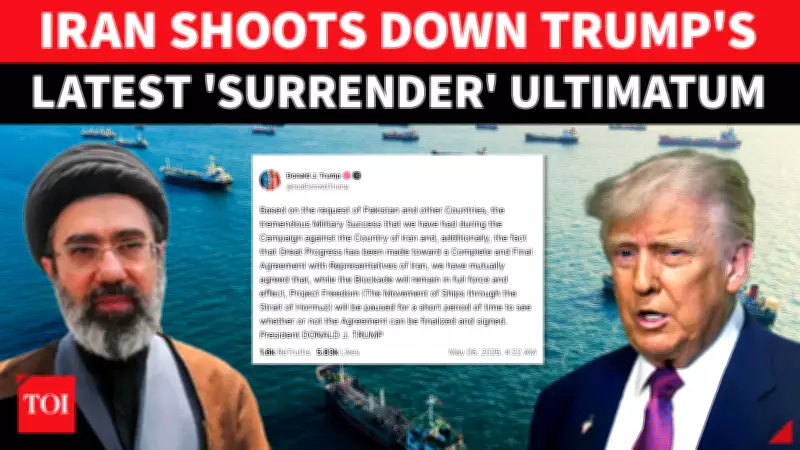
These developments occur as U.S. President Donald Trump has temporarily paused "Project Freedom" to allow negotiations with Tehran, signaling a potential diplomatic opening. However, despite the pause, Iran's firm stance underscores the mounting pressure and uncertainty over whether diplomacy can prevent further confrontation.

Regional and Global Implications
The standoff has far-reaching consequences for global oil shipments and regional stability. The Hormuz Strait is a critical chokepoint for approximately 20% of the world's oil supply. Any disruption could trigger a spike in energy prices and exacerbate existing global economic challenges.
Iran's defiance comes amid a series of incidents in the region, including attacks on cargo vessels and heightened military posturing. The U.S. has advised American citizens to leave Iraq, while the IRGC has threatened to use unconventional weapons, including dolphin-borne bombs and mosquito fleets, to target U.S. forces.
As both sides remain entrenched, the international community watches closely. The coming weeks will be critical in determining whether dialogue can de-escalate tensions or if the region is headed toward a wider conflict.






