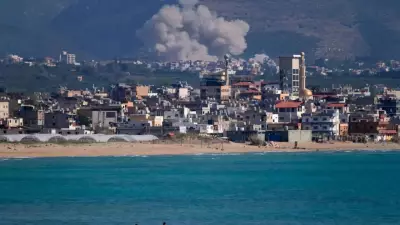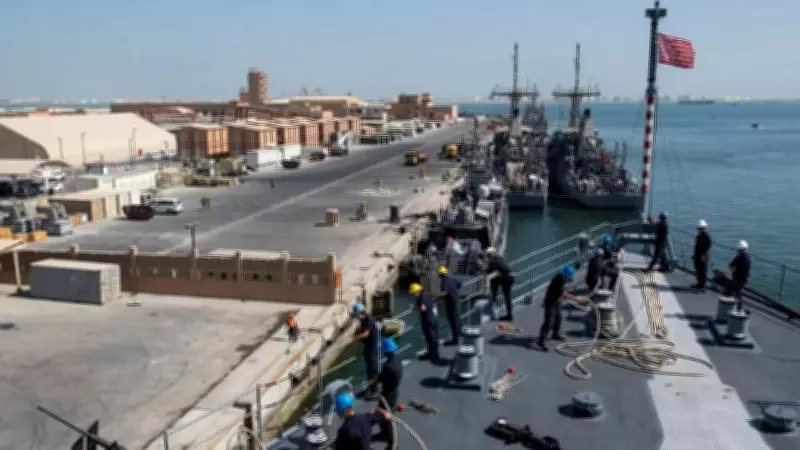
In a fresh escalation of hostilities, Iran has targeted the headquarters of the US Navy's Fifth Fleet in Bahrain. The strike was carried out in retaliation for recent American airstrikes on infrastructure in southern Iran by the Islamic Revolutionary Guard Corps (IRGC).
IRGC Statement on Retaliation
The IRGC stated that the operation was a response to US strikes on the Iranian cities of Jask, Sirik, and Qeshm. According to local media, the IRGC's statement read: "The warmongering US regime attacked several points in Jask, Sirik, and Qeshm early this morning under false pretexts, damaging a telecommunication mast in Sirik and destroying two water tanks in the city."
The IRGC added that its forces retaliated by targeting the US naval headquarters in Bahrain. "In response to the enemy's vicious move, the IRGC naval fighters launched drone strikes on the Bahrain 5th Navy at 2:30 am (2300 GMT Tuesday)," the statement noted.

Background of Escalation
The situation in the region escalated further after a US Army attack helicopter, an Apache, crashed near the Strait of Hormuz. This incident has heightened tensions between the two nations.
Significance of the US Fifth Fleet
Headquartered in Manama, Bahrain, the Fifth Fleet serves as the nerve center of US naval operations across West Asia. Its responsibilities include protecting vital shipping lanes, deterring regional adversaries, and coordinating multinational maritime security missions. The fleet plays a central role in safeguarding some of the world's most strategically important waterways.
The Fifth Fleet's area of responsibility includes the Strait of Hormuz, through which a significant portion of the world's seaborne oil trade passes daily. The modern US Fifth Fleet was reactivated in 1995 after being decommissioned following World War II. It was established in Bahrain in the aftermath of the 1991 Gulf War, as the US Navy needed a permanent presence in the region to oversee operations. It serves as the naval arm of US Central Command (CENTCOM), directing aircraft carriers, destroyers, submarines, maritime patrol, and coalition naval forces deployed in the region.
Key Assets at the Fifth Fleet Headquarters
- Command and Control Center: The headquarters hosts the command and control center of the US Fifth Fleet and US Naval Forces Central Command (NAVCENT), directing naval operations across the Middle East.
- Logistics and Support Hub: It provides maintenance, supply, communication, and operational support to US and allied warships deployed in the region.
- Homeport for Forward Deployed Naval Forces: This includes patrol vessels and selected Littoral Combat Ships (LCS) for maritime security and mine countermeasure operations.
- Task Force 59: The navy's unmanned and AI-enabled maritime warfare unit, operating maritime drones and advanced surveillance systems, is housed here.
- Rotational Deployments: The naval facility regularly accommodates aircraft carriers, destroyers, submarines, and coalition vessels operating under Fifth Fleet command, though they are not permanently based there.
For more than three decades, the Fifth Fleet has acted as the guardian of shipping lanes passing through the Strait of Hormuz. Its strategic location, vast operational reach, and role in countering regional threats have made it a cornerstone of US military strategy in the region.
Implications of the Latest Strike
The latest strike on the facility underscores Iran's choice of target. As hostilities between the USA and Iran continue to rise, diplomatic negotiations remain in jeopardy. The attack on the Fifth Fleet headquarters represents a significant escalation, with potential repercussions for regional stability and global energy security.