

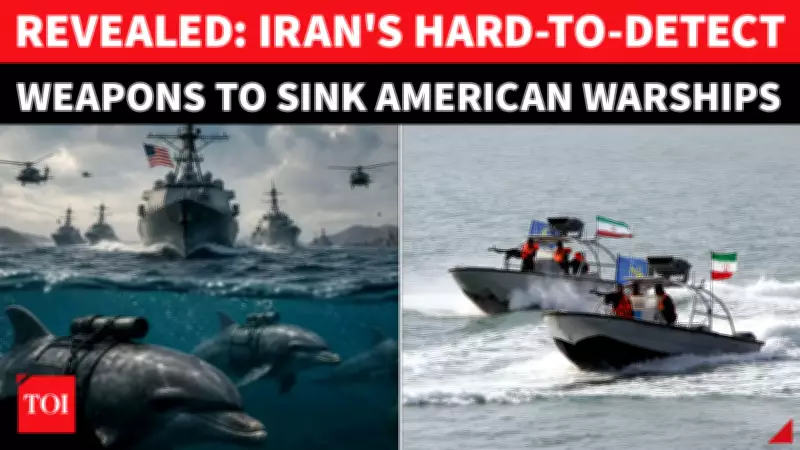
A new dimension of warfare may be emerging in the Strait of Hormuz. As the U.S. blockade tightens, reports suggest Iran could be exploring unconventional tactics — including the potential use of trained dolphins equipped with explosive mines to target warships. Experts like Hamidreza Azizi warn that Tehran increasingly views the blockade not as a substitute for war, but as war itself in another form.
Unconventional Threats on the Horizon
At the same time, Iran’s so-called “mosquito fleet,” operated by the Islamic Revolutionary Guard Corps Navy, continues to pose a serious threat. Thousands of small, fast-attack boats — armed, agile, and difficult to detect — are designed to swarm and overwhelm larger warships in one of the world’s most critical oil chokepoints.
Asymmetric Naval Power
As unconventional tactics meet asymmetric naval power, the Strait of Hormuz is rapidly becoming a high-risk flashpoint with global consequences. The combination of dolphin bombs and mosquito fleet represents a shift in Iran's military strategy, leveraging low-cost, high-impact methods to counter superior U.S. naval forces.

Analysts note that the use of marine mammals in combat is not new, but Iran's potential deployment of explosive-laden dolphins would mark a significant escalation. Meanwhile, the mosquito fleet's swarm tactics could saturate U.S. defenses, forcing difficult decisions in a confined waterway.
The international community watches closely as tensions mount, with any miscalculation potentially triggering a broader conflict. The Strait of Hormuz remains a vital artery for global oil supplies, and any disruption could have severe economic repercussions worldwide.






