

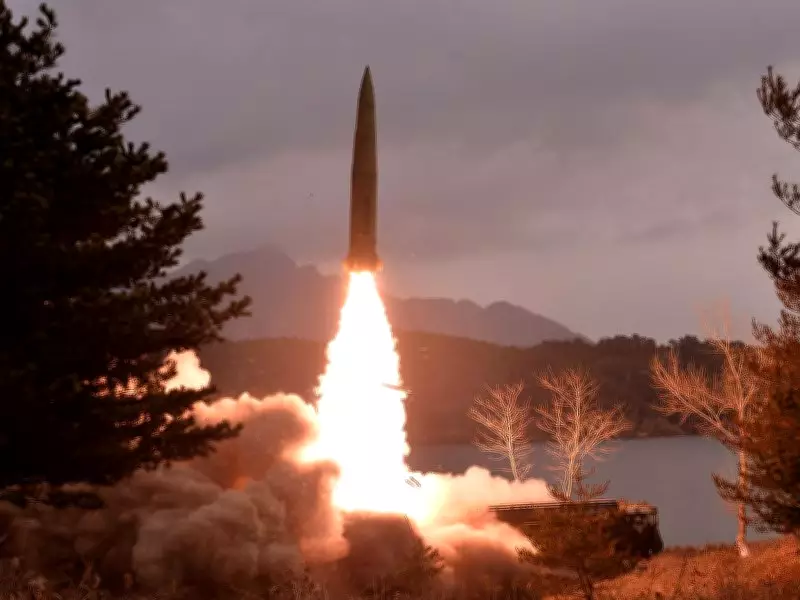
Japan Issues Emergency Alert as North Korea Launches Suspected Ballistic Missile
In a significant escalation of regional tensions, the Japanese government activated its crisis management team on Saturday, March 14, 2026, following a suspected ballistic missile launch by North Korea. The Prime Minister's Office of Japan issued an urgent warning via social media, alerting the public to the developing security threat. This incident has intensified anxieties in East Asia, particularly amid ongoing joint military exercises between the United States and South Korea.
Immediate Government Response and Public Alert
The administration of Japanese Prime Minister Sanae Takaichi, who recently secured a historic landslide victory in the February 2026 general elections, swiftly implemented emergency protocols to monitor the projectile's trajectory. Prime Minister Takaichi, known for her robust stance on regional security, has emphasized the protection of Japanese territory throughout her tenure. The Japan Coast Guard provided specific details, announcing at 1:30 p.m. on Saturday that a ballistic missile was launched from North Korea, based on defense ministry information.
In response, the coast guard issued an urgent advisory, urging ships at sea to stay vigilant for updates. Japanese authorities moved quickly to assess the impact, convening an emergency response team at the crisis management centre in the prime minister's office. This team includes officials from relevant ministries and agencies, highlighting the seriousness of the situation.

Trajectory and Regional Security Implications
According to reports from Japan's public broadcaster NHK, the projectile's flight path indicated that it fell in waters outside Japan's exclusive economic zone (EEZ), reducing the immediate danger to Japanese territory. Kyodo News confirmed this assessment, citing government sources. No damage has been reported so far from the launch. The South Korean military also tracked the activity, stating that North Korea fired at least one unidentified projectile in an eastward direction.
This launch occurs against a backdrop of heightened tensions, as the United States and South Korea continue their annual springtime joint military exercises. North Korea has a history of conducting such military demonstrations, with this incident following a similar pattern earlier in the year. On January 27, 2026, North Korea fired two ballistic missiles toward the Sea of Japan, which were also assessed to have fallen outside Japan's EEZ.
Broader Context and Ongoing Monitoring
The activation of Japan's crisis team underscores the persistent security challenges in East Asia. Prime Minister Takaichi's government remains focused on safeguarding national interests and maintaining stability in the region. Authorities continue to monitor the situation closely, with updates expected as more information becomes available. This event serves as a reminder of the volatile nature of regional geopolitics and the importance of preparedness in response to potential threats.






