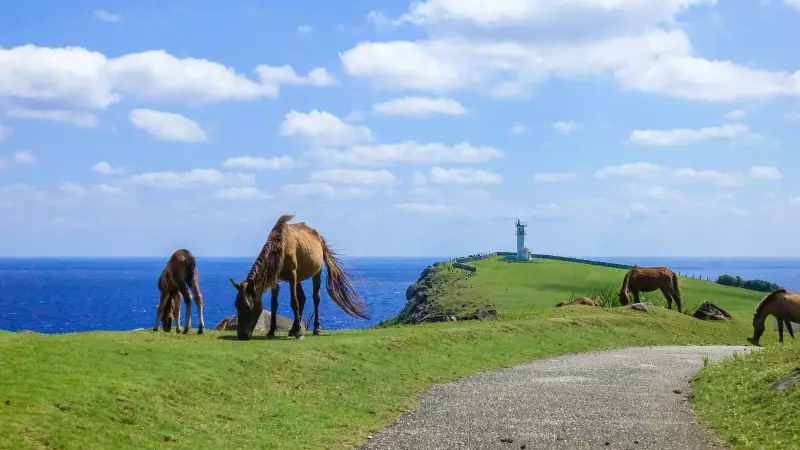
On a remote Japanese island closer to Taiwan than to Tokyo, a quiet community is living on the front lines of one of Asia's most tense geopolitical standoffs. Yonaguni, the westernmost point of Japan, has become a strategic flashpoint in the escalating feud between Japan and an increasingly assertive China.
A Strategic Outpost in Contested Waters
Yonaguni is a tiny, sparsely populated island, home to just under 2,000 residents. Its geographical position, however, is of immense strategic importance. The island sits a mere 110 kilometers (68 miles) east of Taiwan and roughly 150 kilometers from the Senkaku Islands, a group of uninhabited islets controlled by Japan but claimed by China, where they are known as the Diaoyu Islands.
This proximity has transformed Yonaguni from a sleepy, aging fishing community into a critical military outpost. In 2016, the Japan Ground Self-Defense Force (JGSDF) established a permanent garrison on the island, stationing around 160 troops along with coastal surveillance radar units. The primary mission of this contingent is to monitor maritime and air activity in the surrounding waters, a direct response to China's growing military presence and frequent incursions near Japanese-administered territory.

Daily Life on a Geopolitical Fault Line
For the island's residents, the military's arrival has brought a complex mix of economic benefits and profound social change. The base provides jobs and injects money into the local economy, offering a lifeline to a community grappling with depopulation and an aging demographic. New businesses, including a barbershop and a laundry service, have sprung up to cater to the soldiers and their families.
Yet, the transformation is bittersweet. The island's mayor, Kenichi Itokazu, acknowledges the economic boost but also voices the underlying anxiety shared by many. "We are now on the front line," he states, capturing the pervasive sense of vulnerability. Residents are acutely aware that in the event of a conflict over Taiwan or the Senkakus, Yonaguni could be one of the first targets.
This reality has forced the community to confront its new identity. Once known for its strong liquor, "Donan" awamori, and as a diving destination with unique underwater ruins, Yonaguni must now also be defined by its radar station and soldiers. The island has conducted evacuation drills, preparing for potential missile attacks—a stark reminder of the high-stakes game playing out in its backyard.
Regional Tensions and the Taiwan Factor
The militarization of Yonaguni cannot be separated from the broader regional tensions. China's sweeping territorial claims in the South and East China Seas, coupled with its dramatic military modernization and frequent patrols, have put Japan and its allies on high alert. The situation around Taiwan, which China views as a breakaway province, adds another volatile layer.
Japan's security strategy has undergone a significant shift in response. The government has substantially increased defense spending and is deepening security ties with partners like the United States, Australia, and the Philippines. Strengthening the defense of its southwestern islands, including Yonaguni, Ishigaki, and Miyako, is a central pillar of this new strategy aimed at creating a more credible deterrent against potential Chinese coercion.
An Uncertain Future for a Frontline Community
The story of Yonaguni is a microcosm of the larger geopolitical struggle reshaping the Indo-Pacific. The island's residents find themselves caught between the promise of economic revitalization and the peril of becoming a pawn in a great power competition. While the military presence offers a temporary buffer against population decline, it also permanently alters the island's character and exposes it to unprecedented risks.
The long-term consequences remain uncertain. Will Yonaguni's fortification help maintain a fragile peace through deterrence? Or will it inadvertently increase the chances of a miscalculation or escalation in a crisis? For now, the people of Yonaguni navigate their daily lives with a wary eye on the horizon, living a reality where geopolitics is no longer a distant news headline but the defining feature of their home.

The tiny island's experience underscores a critical truth: in an era of renewed great power rivalry, even the most remote communities can find themselves on the front lines, their futures inextricably linked to the ebb and flow of international diplomacy and military posturing.