

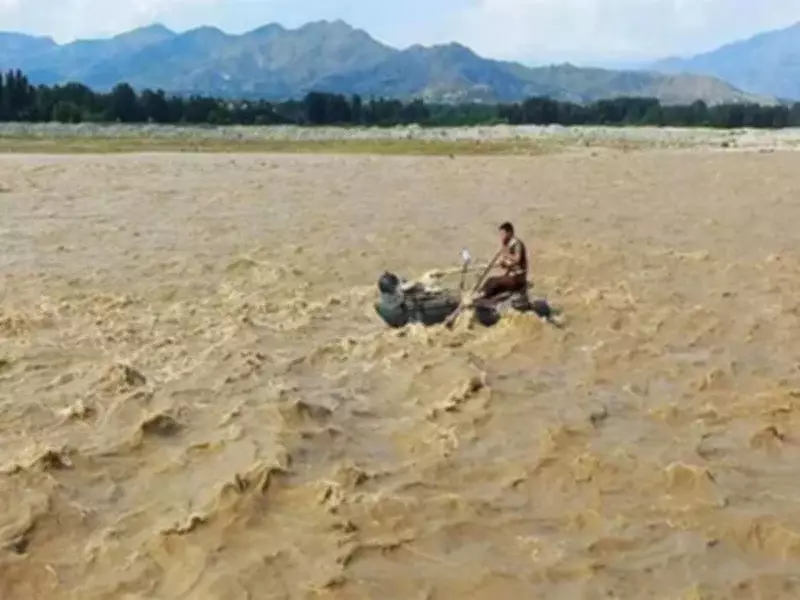
SRINAGAR: Around 46 days after a nine-year-old boy from Kargil drowned in the Suru river and was swept into Pakistan-occupied Kashmir (PoK), Pakistani authorities on Tuesday handed over his remains to Indian officials at the Teetwal-Keran crossing in north Kashmir's Kupwara district.
Ladakh Police later received the body and transported it to the child's native village, Hunderman, in Kargil, on Wednesday morning for the last rites, officials said.
On March 20, the boy, Zulqarnain Ali, and his friend were playing near the river when they both fell into the water. One body was fished out soon after, but the currents carried the other downstream into PoK's Baltistan region, officials said.

"We appreciate the humanitarian gesture shown by the administrations on both sides. Humanity must always prevail over hostility. At the same time, governments of India and Pakistan, particularly the foreign ministries and military authorities, must establish a formal meeting point at the Kargil–Kharmang border," said Kargil Democratic Alliance leader Sajad Kargili.
Kargili cited similar past accidents, where bodies recovered in Kharmang had to be buried there due to the absence of any repatriation mechanism. "For over seven decades, the people of Ladakh and Baltistan have lived with the pain of separation, with thousands of divided families across borders. It is tragic that not only the living remain separated, but even the deceased are often denied a dignified return to their loved ones. Establishing a humanitarian coordination point on the Kargil border is no longer optional — it is a moral and humanitarian necessity," he added.
The incident highlights the ongoing challenges faced by families in border regions, where natural disasters or accidents can lead to complex cross-border issues. The lack of a formal mechanism for repatriation of bodies has caused additional grief to affected families. Local leaders have repeatedly called for a structured humanitarian corridor to address such situations promptly and with dignity.
This event also underscores the broader need for people-to-people contact and confidence-building measures between India and Pakistan, particularly in sensitive areas like Ladakh and Gilgit-Baltistan. While political tensions remain high, gestures of goodwill at the human level can help bridge the divide and foster mutual understanding.






