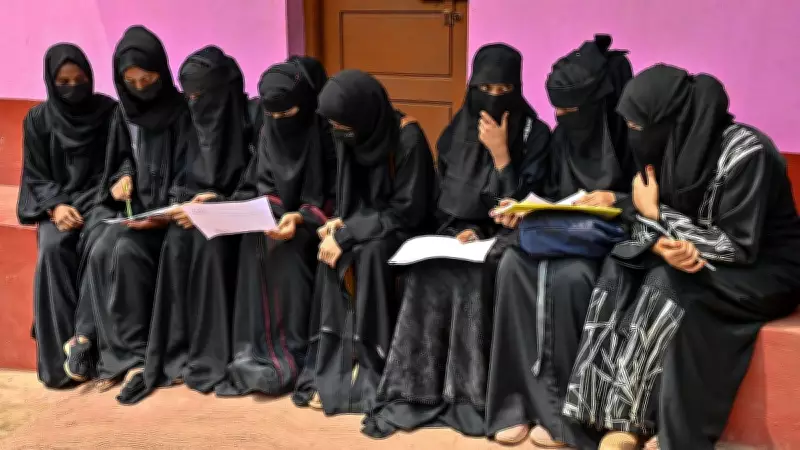
Nearly 40 to 50 percent of the 145 Muslim girl students who dropped out of government and aided degree colleges in Karnataka following the hijab row have not resumed their studies, with many of them now married, according to a recent report.
Background of the Hijab Row
The controversy erupted in early 2022 when a government college in Udupi denied entry to Muslim students wearing hijab, leading to widespread protests and a legal battle. The Karnataka High Court later upheld the ban on religious attire in educational institutions, a decision that was subsequently challenged in the Supreme Court.
Impact on Students
According to data compiled by the state's Department of Collegiate Education, out of 145 affected students, a significant portion—estimated between 40 and 50 percent—has not returned to any form of formal education. Many of these students have instead entered into marriage, reflecting a drastic shift in their life trajectories.

Key Findings:
- Total dropouts: 145 Muslim girl students from government and aided degree colleges.
- Percentage not resuming studies: 40-50%.
- Many of these students have gotten married.
- Remaining students either transferred to other institutions or opted for distance learning.
Reasons for Not Resuming Studies
Several factors contributed to the students' decision not to continue their education. The prolonged legal uncertainty, social pressure, and financial constraints played a role. Additionally, some families preferred to marry off their daughters rather than risk further disruptions to their education.
Educational experts have expressed concern over the long-term consequences, emphasizing that the dropout rate could exacerbate gender disparities in higher education and limit economic opportunities for these women.
Official Response
The Karnataka government has stated that it is monitoring the situation and has offered counseling and alternative educational pathways to affected students. However, the effectiveness of these measures remains unclear, as many students have already moved on from academic pursuits.
The issue continues to be a sensitive topic in the state, with political parties and religious groups holding divergent views. The Supreme Court is yet to deliver a final verdict on the matter, leaving the legal status of the hijab ban in educational institutions unresolved.