

Kazakhstan: The World's Largest Landlocked Nation
Geography constantly reveals surprising facts that challenge our perceptions of the world map. Among the most intriguing geographic questions involves landlocked countries—nations completely surrounded by other territories without direct access to the sea. While many assume large countries always feature coastlines and ports, several substantial nations exist entirely inland. One stands out not only for its size but also for its profound historical and geographic importance: Kazakhstan.
Understanding Landlocked Geography
What exactly defines a landlocked country? It is a sovereign state entirely enclosed by other countries' borders, lacking any coastline connecting to an open ocean. Although Kazakhstan borders the Caspian Sea, this body of water is technically a large inland lake rather than an ocean, meaning the country remains classified as landlocked. This distinction is crucial in geographic studies and international relations.
Kazakhstan's Geographic Profile
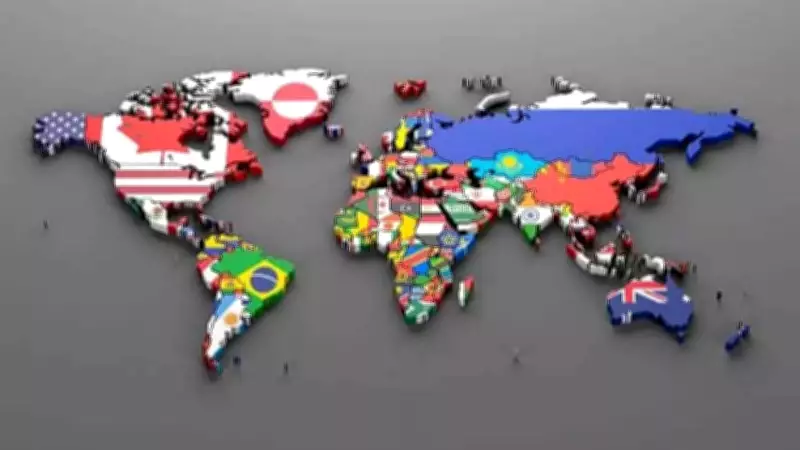
Kazakhstan holds the remarkable distinction of being the world's largest landlocked nation. Situated in Central Asia, it covers an expansive area exceeding 2.7 million square kilometers, making it the ninth-largest country globally. Its vast territory encompasses diverse landscapes including:

- Vast steppes stretching to the horizon
- Arid deserts with unique ecosystems
- Majestic mountain ranges
- Significant inland water bodies
Despite this enormous geographic footprint, Kazakhstan has no direct access to any ocean—a fact that surprises many given its substantial size and strategic position.
Historical Significance and Geographic Identity
Kazakhstan's landlocked status has profoundly shaped its national identity and historical development. The country served as a critical segment of the ancient Silk Road, the legendary network of overland trade routes that connected Eastern and Western civilizations for centuries. This geographic position transformed Kazakhstan into a cultural and economic crossroads where ideas, goods, and innovations flowed between continents.
Even today, Kazakhstan's landlocked geography continues to define its role in global affairs. The nation has evolved into an essential transit corridor between Europe and Asia, with modern transportation infrastructure facilitating international trade and diplomatic exchanges. This challenging geographic reality has fostered remarkable resilience and resourcefulness among the Kazakh people, contributing to their strong sense of national identity.
Modern Relevance and Economic Adaptation
Understanding why Kazakhstan remains the world's largest landlocked country provides valuable insights into contemporary global dynamics. Contrary to assumptions that landlocked nations face economic disadvantages, Kazakhstan has developed sophisticated strategies to overcome geographic limitations. The country has established:
- Extensive railway networks connecting to multiple international borders
- Strategic pipeline systems for energy exports
- Comprehensive trade agreements with neighboring countries and global partners
- Multimodal transportation corridors that bypass oceanic routes
These adaptations demonstrate how geographic challenges can inspire innovative solutions, with Kazakhstan serving as a compelling case study in economic resilience and strategic planning.
The story of Kazakhstan's geography reminds us that national greatness isn't determined by coastal access alone. Through historical significance, strategic positioning, and adaptive economic policies, this Central Asian nation continues to demonstrate how landlocked countries can play pivotal roles on the world stage.






