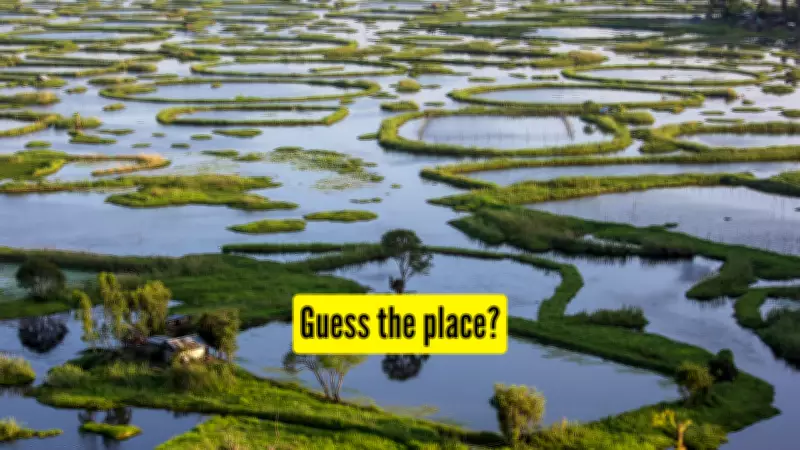
Keibul Lamjao: The World's Only Floating National Park
Imagine a national park that does not rest on solid ground but instead drifts gently upon the water. This is a place where the earth feels spongy underfoot, where forests appear to float, and where deer seem to perform a delicate dance as they navigate across shifting vegetation. Welcome to Keibul Lamjao National Park, the world's sole floating national park, a natural wonder located in the Bishnupur district of Manipur, India.
A Unique Floating Landscape
Spanning approximately 40 square kilometers, Keibul Lamjao forms an integral part of Loktak Lake, the largest freshwater lake in Northeast India. Loktak Lake has been designated a Ramsar site, acknowledging its international significance as a vital wetland ecosystem. The park's defining characteristic is its extensive coverage of phumdis—thick, floating masses composed of decomposed vegetation, organic matter, and soil. These phumdis are created through the gradual accumulation of biomass and organic detritus over time, with two-thirds to three-fourths of the park's area consisting of these remarkable floating formations.
Situated on the southeastern side of Loktak Lake, the park is often described as being "too deep to be a marsh, too shallow to be a lake." A navigable waterway runs through the park, providing year-round boat access from Loktak Lake to Pabot Hill in the north. Additionally, the swampy reserve encompasses three small hills—Pabot, Toya, and Chingjao—which serve as crucial refuges for large mammals during the monsoon season when water levels rise significantly.

Sanctuary for the Endangered Sangai Deer
Keibul Lamjao was initially declared a wildlife sanctuary in 1966 with the primary objective of protecting the endangered Sangai, also known as the brow-antlered deer (Cervus eldi eldi). It was later gazetted as a national park in 1977. The Sangai, which holds the status of Manipur's state animal, carries deep cultural significance in local folklore. First recorded in Manipur in 1839 and formally named in 1844 in honor of Lt. Percy Eld, the species was declared extinct in 1951. However, it was rediscovered in the Keibul Lamjao area by environmentalist and photographer E.P. Gee, leading to intensified conservation efforts.
From a modest herd of just 14 deer in 1975, the population grew to 155 by 1995. According to the wildlife census conducted in March 2016, the number further increased to 260, marking a substantial recovery attributed to dedicated conservation initiatives. The Sangai is often referred to as the "dancing deer" due to its delicate and graceful gait while traversing the floating phumdis. Its survival is intricately linked to the health and thickness of these floating meadows.
Ecological Significance and Conservation Status
The ecosystem of Keibul Lamjao is highly sensitive. The formation and regeneration of phumdis depend on natural water-level cycles within Loktak Lake. Any disruption to the hydrology can adversely affect the stability of the floating biomass and the species that rely on it. Originally covering 4,000 hectares in March 1997, the reserve area was reduced to 2,160 hectares in April 1998 due to pressures from local habitation and land use changes.
Keibul Lamjao is currently on UNESCO's tentative list under the designation "Keibul Lamjao Conservation Area (KLCA)," which also includes buffer zones covering parts of Loktak Lake and Pumlen Pat. This recognition underscores the park's global ecological importance and the need for ongoing preservation efforts.
A Glimpse into a Rare Wetland Ecosystem
Keibul Lamjao offers a unique window into a rare wetland ecosystem found nowhere else on Earth. This floating national park is sustained by nature's layered accumulation of plant life and organic matter. It stands as a fascinating destination where land drifts, deer dance, and an entire ecosystem thrives on water. Visitors can experience this extraordinary environment, witnessing firsthand the delicate balance between flora, fauna, and the aquatic landscape that defines this one-of-a-kind natural treasure.