

The Kerala State Electricity Board (KSEB) has decided to introduce load shedding of up to 30 minutes between 6 pm and midnight to manage the rising power demand. The decision was taken during a high-level meeting held on Tuesday, where it was decided to regulate demand based on real-time conditions.
Load Shedding Details
The meeting directed the Kerala State Load Despatch Centre to implement restrictions to control the demand. Top officials will review the situation on a daily basis. The board is hopeful that a delayed but widespread spell of summer rains will bring down temperatures and ease the demand pressure.
Record Power Consumption
Power consumption in the state hit an all-time high of 118.26 million units (MU) on Monday. The evening peak demand touched a record 6,195 MW for a minute at 10.30 pm on April 23. This surge has put immense strain on the system.

Political Context
The decision comes against the backdrop of the LDF government's political narrative of a decade without load shedding during the recent assembly election campaign. However, the current situation underscores the strain on the system.
Reasons for Surge
The meeting attributed the surge largely to rising temperatures. Against a forecast of 38 degrees Celsius, the mercury climbed to 41 degrees Celsius, triggering a sharp increase in air-conditioner use. A KSEB communication stated, "In light of the heatwave sweeping across the country, electricity availability in the national market has dropped significantly. As a state that procures over 70% of its power from outside, this has been identified as a crisis."
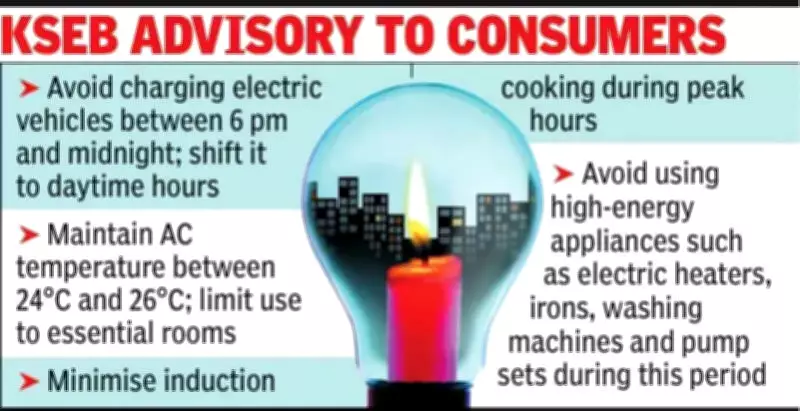
The 200 MW shortfall from central generating stations is expected to be resolved by the evening of April 28, 2026. The meeting noted that an unexpected surge in demand triggered the crisis, with this year's growth far outpacing the average annual increase. "The spike is attributed to higher air-conditioner use and electric vehicle charging after 6 pm, along with increased reliance on induction cooking amid a cooking gas shortage linked to the Middle East conflict," it said.
Public Cooperation Needed
However, the meeting noted that excess consumption is largely confined to specific hours between 9.30 pm and midnight, and the situation could be managed with public cooperation and responsible energy use. It warned that excessive demand could strain the transmission and distribution network, leading to serious disruptions.
Extreme Measures
In extreme situations, the meeting authorised the chief engineer of the State Load Despatch Centre to enforce power regulation for up to 30 minutes between 6 pm and midnight to maintain grid stability.






