

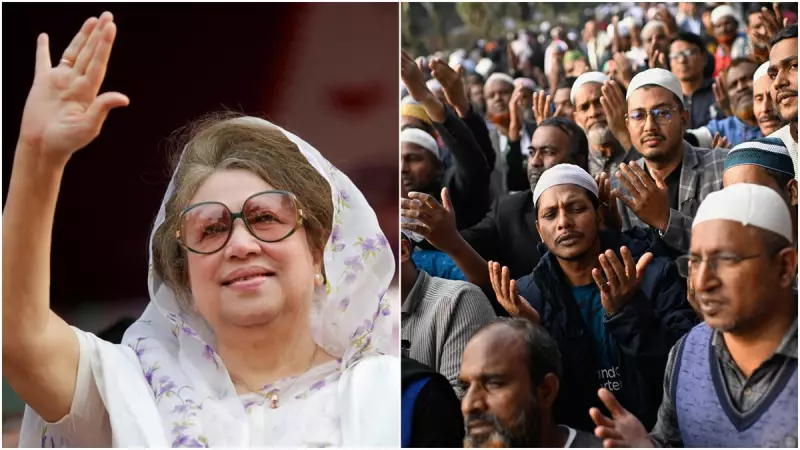
Bangladesh observed a day of national mourning on Tuesday, December 31, 2024, as the country laid to rest one of its most consequential political figures. Begum Khaleda Zia, the former Prime Minister and chairperson of the Bangladesh Nationalist Party (BNP), was buried beside her husband, the late President Ziaur Rahman, at the Chandrima Udyan in Dhaka's Sher-e-Bangla Nagar area. Her passing marks the end of an era in the nation's tumultuous political history.
A Nation Bids Farewell to an Iron Lady
The final journey of Khaleda Zia began from the Combined Military Hospital (CMH) in Dhaka, where she had been receiving treatment. Her body was then taken to the National Mosque, Baitul Mukarram, for the second janaza (funeral prayer) of the day. This followed an earlier, more private prayer held at the CMH premises. A sea of mourners, comprising party loyalists, citizens, and dignitaries, gathered to pay their last respects to the leader who served as the country's first female prime minister.
The funeral prayers were attended by a host of political figures, family members, and foreign diplomats. However, the absence of key leaders from the ruling Awami League party was noted, highlighting the deep and enduring political divide that defined much of Khaleda Zia's career. Her body was then transported to her final resting place with state honours, a recognition of her service as a former head of government.

Final Resting Place Beside the Founder of the BNP
In a symbolic conclusion to her life's journey, Khaleda Zia was interred next to her husband, President Ziaur Rahman, the founder of the BNP and a former military leader who served as President from 1977 until his assassination in 1981. The burial at Chandrima Udyan, a site of significant national importance, places the two central figures of the BNP side-by-side in perpetuity. The grave of Ziaur Rahman had been constructed years ago, with a space left beside it, reportedly intended for his wife.
The burial ceremony was a somber and tightly secured event. A special military contingent performed a guard of honour, and a 21-gun salute echoed as a final tribute to the former prime minister. Family members, including her son and BNP's senior vice-chairman, Tarique Rahman, who joined virtually from London, were part of the intimate burial proceedings.
Global Reactions and a Complex Political Legacy
The death of Khaleda Zia has elicited reactions from across the globe, reflecting her stature on the world stage. Condolence messages poured in from neighbouring India, Pakistan, and other nations. Indian Prime Minister Narendra Modi expressed his condolences, acknowledging her contributions to Bangladesh-India relations. Leaders from various political backgrounds recognized her role as a formidable leader who shaped Bangladesh's democratic trajectory for decades.
Khaleda Zia's legacy is inextricably linked with the fierce rivalry between the BNP and the Awami League, a dynamic that has dominated Bangladeshi politics. She served as Prime Minister for three terms (1991-1996, 2001-2006) and was a central opposition figure for many years. Her later years were marred by legal battles and health struggles. Her passing leaves a major vacuum in the opposition space and raises questions about the future direction of the BNP as the nation moves forward.
The government's declaration of a national mourning day, with the flag flying at half-mast, underscored the official recognition of her passing. As Bangladesh turns the page on this chapter, the burial of Khaleda Zia beside her husband serves as a powerful visual reminder of a political dynasty that continues to influence the nation's destiny.






