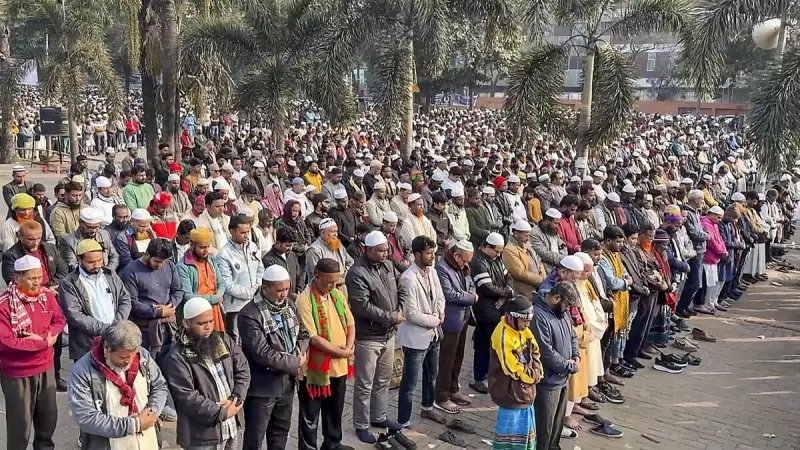
Bangladesh witnessed a moment of profound history and emotion as former Prime Minister Khaleda Zia was laid to rest on 31 December 2025. The veteran political leader and chairperson of the Bangladesh Nationalist Party (BNP) received a final, emotional farewell from thousands of grieving supporters who gathered in the capital, Dhaka.
A Nation Bids Farewell to a Political Icon
The funeral proceedings for Khaleda Zia were marked by an overwhelming public outpouring of grief. Mourners from across the country converged to pay their last respects to the leader who had shaped the nation's political landscape for decades. The scale of the gathering underscored her enduring influence and the deep connection she shared with her party's grassroots.
The ceremony was not just a national event but also a significant diplomatic moment, highlighting Bangladesh's standing in the region. The attendance reflected the late leader's international stature and the current geopolitical ties of the nation.

High-Profile Attendance from India and Neighbouring Nations
The funeral service saw the presence of dignitaries from across South Asia, underscoring the regional importance of the event. India's External Affairs Minister, Dr. S. Jaishankar, represented the Indian government, demonstrating the close, albeit complex, bilateral relationship between the two neighbouring countries.
Senior leaders from Pakistan and Nepal, along with diplomats from other nations, were also in attendance. The top political and military leadership of Bangladesh was present in full force, paying homage to the former head of government. This convergence of foreign and domestic dignitaries painted a picture of a nation united in mourning a formidable figure, despite the political divides that characterized her career.
Legacy of Khaleda Zia and the Road Ahead for Bangladesh
The burial of Khaleda Zia closes a major chapter in Bangladesh's political history. As a two-time former Prime Minister, her legacy is intertwined with the nation's journey through democracy, military rule, and economic transformation. Her rivalry with Sheikh Hasina's Awami League defined the country's political binary for generations.
Her passing leaves a significant vacuum within the BNP, the party she led for many years. The emotional send-off from thousands of party workers and citizens signals the deep loyalty she commanded. The coming months will be critical for the BNP as it navigates its future leadership and strategy in a political landscape now absent one of its most iconic pillars. The high-level international presence at her funeral also reaffirms Bangladesh's pivotal role in regional geopolitics, a status that will continue to be watched closely by allies and observers alike.