

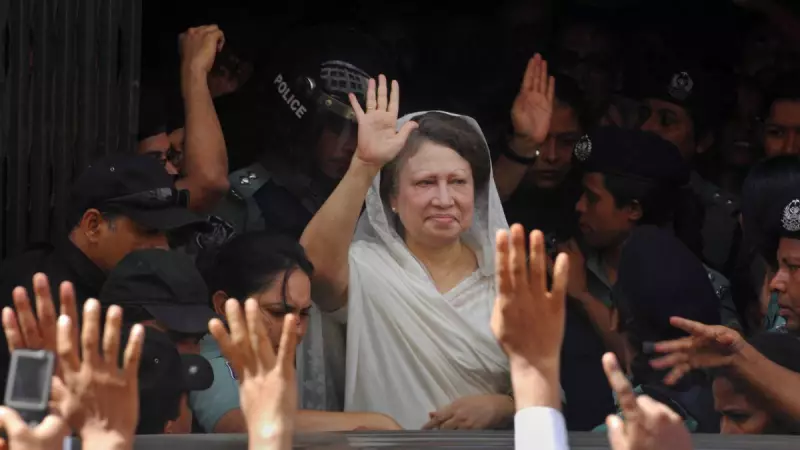
The political landscape of Bangladesh is holding its breath as Khaleda Zia, the country's former Prime Minister and chairperson of the Bangladesh Nationalist Party (BNP), faces a severe health crisis. According to her personal physician, her condition is now described as 'extremely critical', raising alarms among her supporters and political observers alike.
A Deteriorating Health Battle
The grim update on Khaleda Zia's health was delivered by her long-time doctor, Professor AZM Zahid Hossain. He confirmed that the 79-year-old leader's health has taken a serious turn for the worse. Zia has been battling a complex array of health issues for several years, including liver cirrhosis, arthritis, diabetes, and complications related to kidney and lung ailments.
Her treatment has been a subject of intense political discourse. Since her conviction in corruption cases, she had been serving a prison sentence until she was released on a suspended sentence in March 2020 on humanitarian grounds, conditional on receiving medical care at home and not traveling abroad.

Family Visit Amidst Crisis
In a significant development, her son, Tarique Rahman, who serves as the acting chairman of the BNP and lives in exile in London, visited his ailing mother. His visit underscores the gravity of the situation. Tarique Rahman, a central figure in Bangladeshi politics, faces multiple legal convictions himself and his return to Bangladesh is fraught with political and legal implications.
The visit, while personal, carries substantial political weight. It highlights the ongoing tensions between the BNP and the ruling Awami League government, especially concerning the medical treatment and freedom of the opposition leader.
Political Implications and Public Reaction
Khaleda Zia's critical condition has sent shockwaves through Bangladesh. As a two-time former Prime Minister (1991-1996 and 2001-2006), she remains a towering, albeit controversial, figure. Her absence from active politics due to illness and legal battles has already created a vacuum within the BNP.
The government, led by Prime Minister Sheikh Hasina, has stated previously that the law must take its course regarding Zia's treatment and travel permissions. The BNP and her family have repeatedly appealed for her to be allowed to seek advanced medical care overseas, a request that has so far been denied by the authorities.
This latest health scare is likely to intensify calls from her party and international human rights organizations for clemency and permission for foreign treatment. The situation places the government in a delicate position, balancing legal procedures with humanitarian considerations.
The coming days are crucial for Khaleda Zia's health. With her doctor confirming an 'extremely critical' state and her exiled son by her side, the episode is more than a personal tragedy; it is a pivotal moment in Bangladesh's charged political environment. The nation watches closely, awaiting further medical updates and potential political repercussions.






