

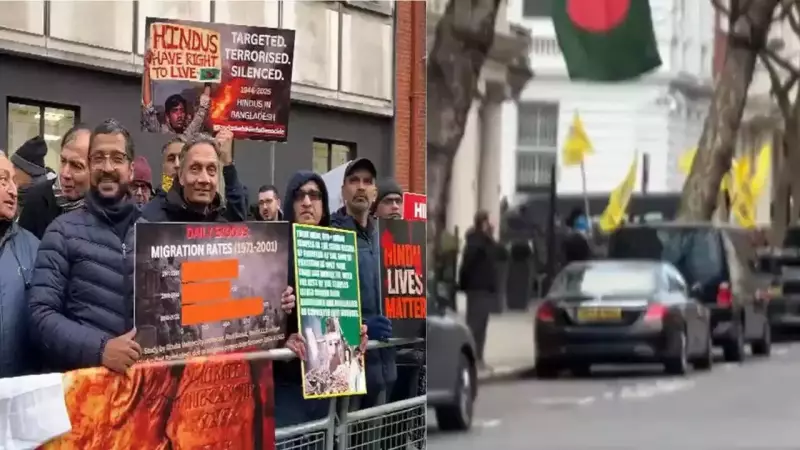
A peaceful demonstration in London, organised by the Hindu community to protest the recent killing of a Hindu man in Bangladesh, was disrupted by Khalistani elements. The incident occurred outside the Bangladesh High Commission on Saturday, where Indian and Bangladeshi Hindus had gathered.
Protest in London Turns Chaotic
The protest was a response to the lynching of Dipu Chandra Das and Amrit Mondal in a communally charged atmosphere in Bangladesh. As the Hindu demonstrators voiced their concerns, a handful of Khalistani supporters arrived at the scene, ostensibly to express support for Bangladesh, leading to a disruption of the peaceful gathering.
Desperate SOS from Hindus in Bangladesh
Trapped and fearing for their safety, many Hindus in Bangladesh are sending out desperate appeals to India. In conversations facilitated by exiled Bangladesh Sanatan Jagran Macha leader Nihar Haldar, Hindus from Rangpur, Chittagong, Dhaka, and Mymensingh expressed their terror. A resident of Mymensingh stated that opening the Indian borders would create a crucial escape route for those facing persecution, even if it doesn't trigger a full-scale exodus.

Dr Subodh Biswas, president of the Nikhil Bangla Samanbay Samiti, an organisation of former East Pakistan refugees, criticised the inaction. "Why don't Hindu organisations get proactive? India is the only country where Hindus of Bangladesh can bank upon during a crisis," he said, announcing plans to stage protests at the border.
India's Stern Response and Growing Tensions
The situation reached a diplomatic head on Friday when India slammed Dhaka for "unremitting hostility" against minorities, including Hindus, Christians, and Buddhists. The Ministry of External Affairs condemned the killing in Mymensingh and demanded the perpetrators be brought to justice.
Concerns have been further accentuated by the groundswell of support for Bangladesh Nationalist Party leader Tarique Rahman, considered a hardliner, who recently returned to Dhaka after 17 years. The Indian government stated this development should be viewed in the context of ensuring free and fair elections in Bangladesh.
The anxiety is palpable even in refugee settlements in India, such as those in Gadchiroli and Chandrapur in Maharashtra, and Pakhanjur in Chhattisgarh, where Hindu immigrants from erstwhile East Pakistan reside. An anonymous Sanatan Jagran Macha activist issued a grave warning, stating, "We are staring at a holocaust," and lamented that the plight of Bangladesh's 2.5 crore Hindus is being met with little more than lip service from organisations in India.






