

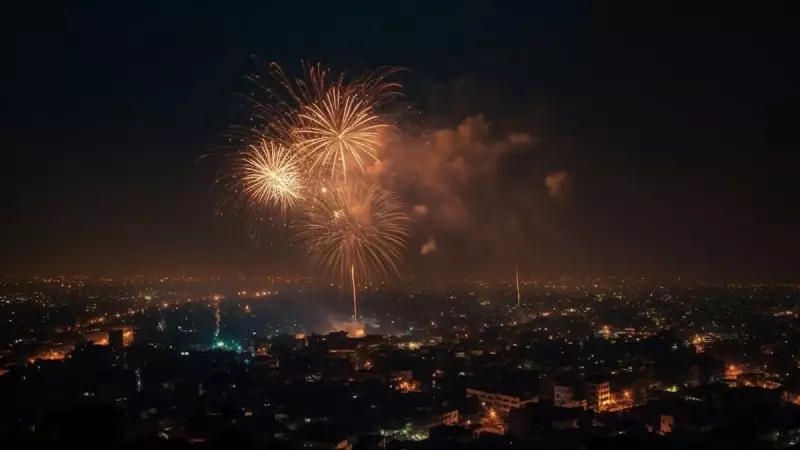
As the world geared up to bid farewell to 2024, a tiny island nation in the central Pacific Ocean had already popped the champagne. The Republic of Kiribati, specifically its Line Islands region, became the very first place on Earth to welcome the New Year 2025, ringing in the celebrations at 10:30 AM Indian Standard Time (IST) on December 31st.
The Race to Midnight: Kiribati's Time Zone Advantage
This annual headline-grabbing event is not a matter of chance but a deliberate result of both geography and political decision-making. Kiribati stretches across a vast expanse of the Pacific, straddling the equator and all three longitudinal lines. For most of its history, the country was split by the International Date Line (IDL), the imaginary line that separates one calendar day from the next. This meant that while one part of Kiribati was experiencing Tuesday, another part was still in Monday, causing immense logistical and administrative headaches.
In a landmark move in 1995, the government of Kiribati decided to redraw the practical application of the Date Line for its territory. It officially moved the line far to the east, ensuring the entire nation would share the same day. Crucially, the Line Islands, including Kiritimati (Christmas Island), adopted the UTC+14 time zone, the farthest ahead of any in the world. This positioned them a full 24 hours ahead of the islands of Hawaii (UTC-10) and a significant 26 hours ahead of the last places to celebrate, like Baker Island in the United States.

The 26-Hour Global New Year Rollout
The consequence of this time zone configuration is a global celebration that unfolds like a slow-moving wave over more than a full day. The festivities commence when clocks in the Line Islands of Kiribati and Samoa strike midnight. From that point, the New Year sweeps westward across Asia, Europe, Africa, and the Americas.
The final fireworks don't explode until 26 hours later, when the day finally ends in the uninhabited US territories of Baker Island and Howland Island at UTC-12. This remarkable span means that when residents of Kiribati are already enjoying their New Year's Day lunch, many in the world are still preparing for their own eve celebrations from the previous year.
The sequence of firsts after Kiribati typically includes:
- Samoa and parts of New Zealand
- Australia (Sydney)
- Asian nations like Japan, South Korea, and eventually India
- Europe, the Middle East, and Africa
- South America and North America
More Than Just a Celebration: Significance and Symbolism
Being the first to see the sunrise of a new year carries deep symbolic weight. For Kiribati, it has become a point of national pride and a unique claim to global attention. The event highlights the island nation's presence on the world stage, drawing focus to its culture and the existential challenges it faces, primarily climate change and rising sea levels.
For the rest of the world, the staggered New Year is a vivid, annual reminder of our planet's rotation and the human-constructed systems we use to measure time. It underscores how political boundaries and decisions can literally alter the calendar. The 26-hour journey from the first "Happy New Year!" to the last is a testament to the incredible diversity and sheer size of our world, all connected yet experiencing the passage of time in a beautifully sequential manner.
So, as you celebrated the arrival of 2025, remember that the party started not with your local countdown, but a full day earlier on the sun-drenched shores of Kiritimati. It's a fascinating quirk of time that makes our global village feel both intimately connected and wonderfully vast.






