The year 1883 witnessed one of the most catastrophic volcanic eruptions in recorded history, emanating from the Indonesian volcano Krakatoa, also known as Krakatau. Situated in the Sunda Strait between the islands of Java and Sumatra, the eruption unleashed immense power, generating colossal tsunamis, plunging half the Earth into darkness, and obliterating much of the island. Decades later, a new volcanic island, Anak Krakatau, meaning Child of Krakatoa, emerged from the sea, only to partially collapse in 2018. However, the story of Krakatoa encompasses not only devastation but also the remarkable cycle of destruction and rebirth.
The Rise of Krakatoa and the Birth of Anak Krakatau
Krakatoa had been a volcanically active island long before its infamous 1883 eruption, driven by tectonic forces associated with the Pacific Ring of Fire. The island sat atop a subduction zone where the Indo-Australian Plate slid beneath the Eurasian Plate, creating intense underground pressures. According to findings published in the Journal of Applied Geoscience and Engineering, prior volcanic collapses may have formed a caldera hundreds of years ago.
As reported by NASA, Krakatoa became increasingly active in May 1883, with ash clouds, tremors, and eruptions signaling rising underground pressures. The climax occurred on August 27, 1883, when four massive explosions blew apart most of the island within hours. Scientists estimate that the eruption ejected approximately 18 to 21 cubic kilometers of volcanic material into the atmosphere. Notably, the eruption produced the loudest sound in recorded human history, audible thousands of kilometers away.

The Devastating Tsunamis and Global Impact
The explosions triggered tsunamis reaching heights of up to 30 meters, which ravaged coastal communities on Java and Sumatra. Over 36,000 people perished, not from the eruption itself but from the resulting tsunamis. According to meteorologist G. J. Symons' 1884 publication Eruption of Krakatau and Subsequent Phenomena, the Royal Society formed a committee to collect accounts of the eruption and its aftermath for preservation and scientific study.
Later research published in Nature explained that pyroclastic flows plunging into the sea generated the tsunamis. Additionally, the eruption temporarily altered global weather. Ash and sulfur particles high in the atmosphere created strikingly beautiful sunsets and caused a temporary cooling of the planet.
Anak Krakatau: The Child of Krakatoa Rises
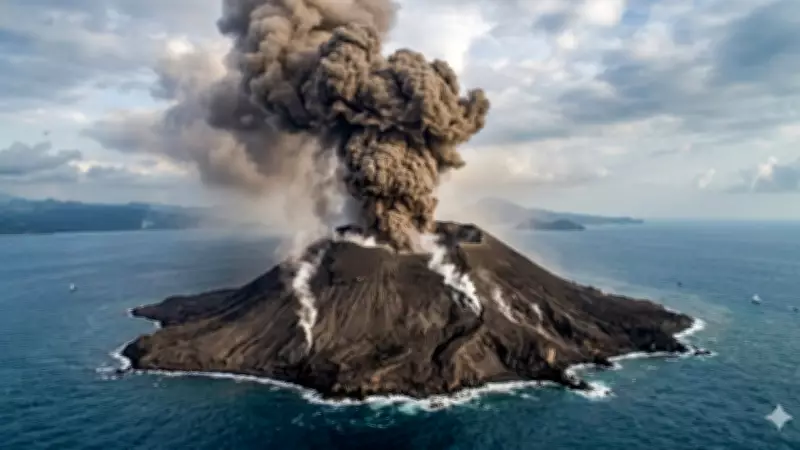
Nearly fifty years after the 1883 disaster, a new volcanic cone began emerging from the ocean in 1927, named Anak Krakatau by locals. Over decades, the island expanded through repeated eruptions and lava flows. NASA satellite images revealed fresh lava as recently as 2012, further extending the island's coastline.
However, like its predecessor, Anak Krakatau proved unstable. In December 2018, a significant portion of the island collapsed into the sea, generating another destructive tsunami that claimed numerous lives along the coast. This event underscored the cyclical nature of Krakatoa's volcanic activity. Today, Anak Krakatau remains highly active, serving as a living laboratory for the processes of creation and destruction.
This article was contributed by the TOI World Desk, a team of experienced journalists dedicated to delivering accurate and timely global news.